South Africa tech's Web3 push meets an Eskom grid problem

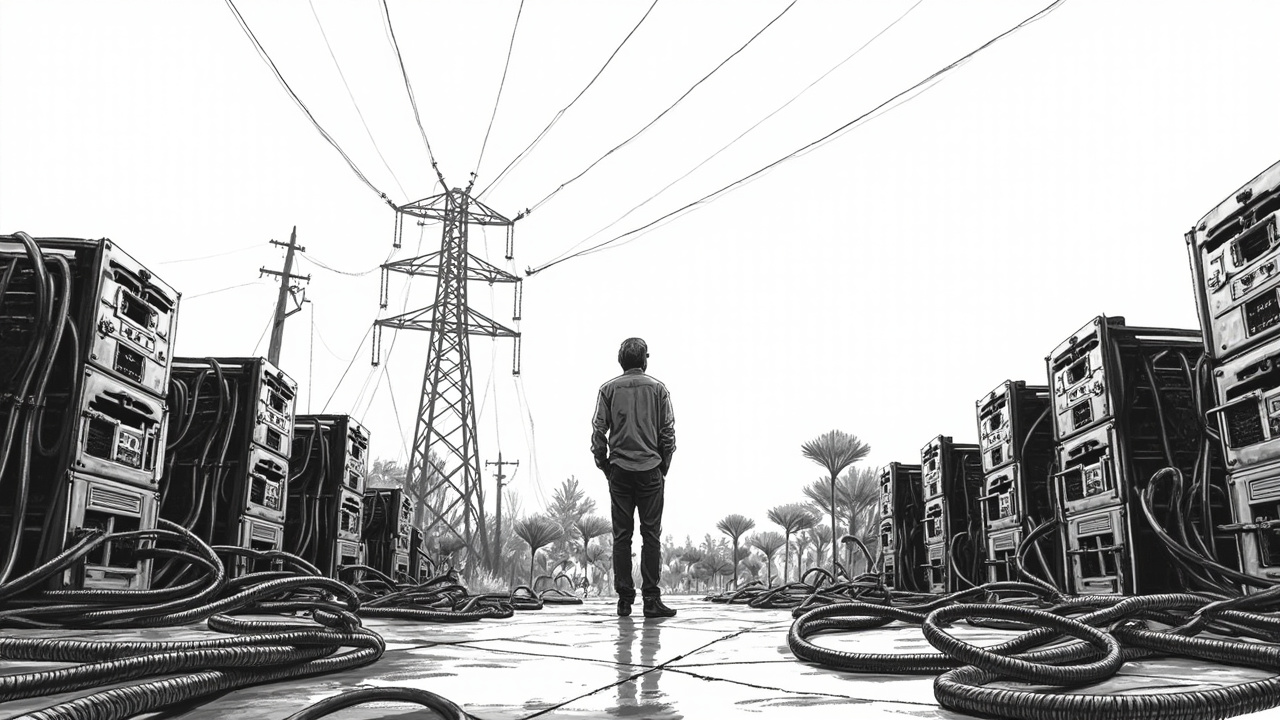
South Africa tech's next growth story will not be written by app developers. It will be written by whoever can secure firm grid capacity.
The Ventureburn report argues Web3 adoption is shifting away from Silicon Valley capital toward emerging markets, carried by smartphone penetration and cheaper data. Fair enough. It stops before the expensive part. Blockchain networks, exchanges and data centres run on electricity, and in South Africa that electricity comes with a queue.
Eskom's debt overhang is the subtext here. Every new large load, whether a mining farm or an exchange's server hall, is either a new revenue line for a utility that badly needs one or another problem for a grid that struggles to keep the lights on. Which one it becomes depends on contracting, not enthusiasm.
Crypto load arrives when the grid can least absorb it
Data centres and proof-of-work operations are the wrong shape for a strained system. They want flat, continuous, high-volume power. South Africa's generation fleet has historically delivered the opposite: intermittent availability, with demand-side pressure concentrated in peak hours.
Wheeling is the choke point. Private generators can sell power across the grid to private buyers, but the agreements require use-of-system tariffs, metering and credit support that most crypto operators are not structured to provide. So they contract directly with Eskom, wait for a wheeling deal, or go behind the meter with their own generation.
Going behind the meter looks clean. It also removes a paying customer from the municipal and utility revenue base, leaving fixed network costs to be recovered from everyone left on the system.
That is the second-order effect missing from every Web3 pitch deck. A self-generating crypto cluster does not just dodge load-shedding. It shifts the cost of the grid onto households and small businesses that cannot leave.
Tariff sustainability is the real adoption ceiling
Nersa's tariff determinations set the price at which any of this math works. When tariffs climb faster than crypto margins, mining economics invert quickly. The risk is not that South Africa bans the sector. The risk is that operators build capacity into a tariff and wheeling regime that changes underneath them.
IPP payment delays compound it. If independent power producers cannot count on being paid on time, the private generation that crypto operators would contract with gets harder to finance. A payment backlog upstream turns into a supply shortage downstream.
One quieter winner exists. Exchanges and custody businesses are far less power-hungry than miners. If mining becomes unviable locally, the trading, compliance and treasury side of Web3 survives and consolidates. Expect capital to rotate out of hardware and into licences, with the FSCA's licensing regime giving that path a defined shape and ICASA's connectivity rules setting the cost of the pipes carrying the volume.
For investors, grid access belongs in diligence, not a footnote. Any South African Web3 or data centre thesis should state who holds the connection rights, what tariff path it assumes, and what happens if wheeling rules or IPP payment timelines slip. Unit economics are only as durable as the power contract behind them.
The friction mostly sits with municipal distribution, not national transmission. A mining operator in a metro with clean billing runs a different business from one in a municipality with weak collections. That gap decides where capacity actually gets built.
The blunt verdict: South Africa's Web3 opportunity is real but power-constrained. The winners will not be the fastest adopters. They will be the ones holding signed connection agreements and a credible answer for what happens when the tariff moves.