Cowboy Space $275M Orbital Data Center Bet Pressures South Africa

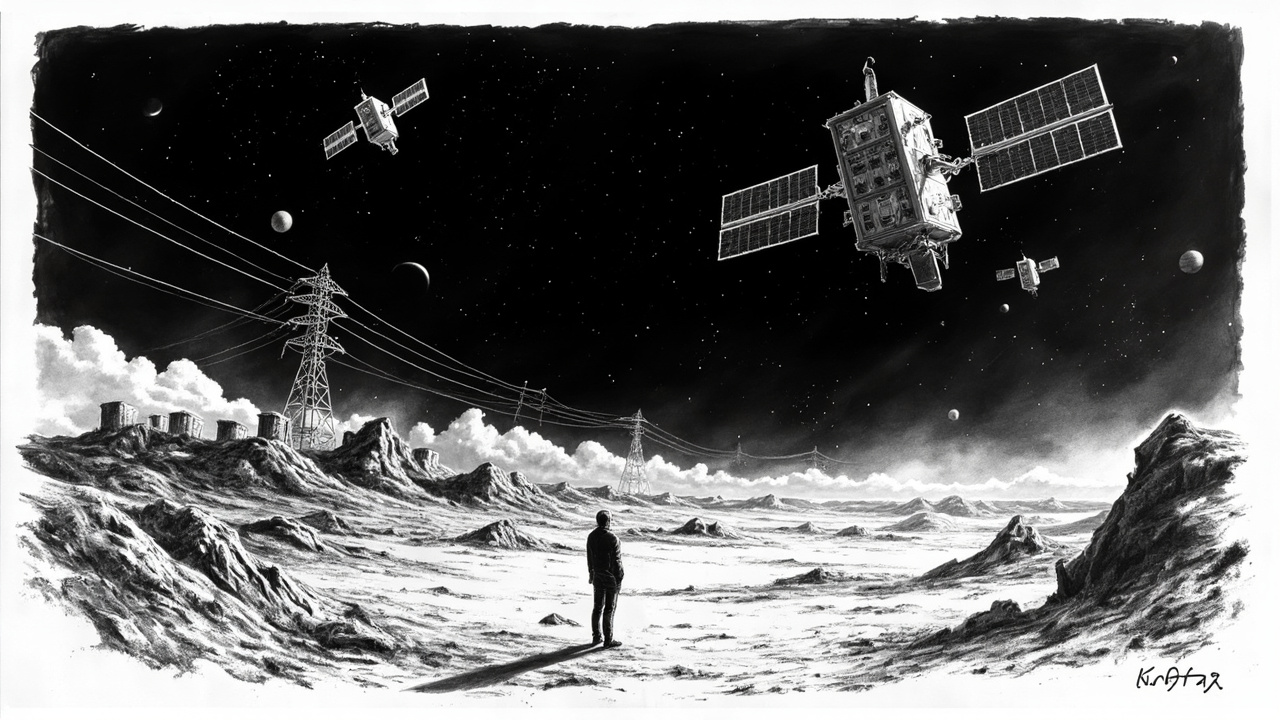
Cowboy Space Corporation just banked $275 million in Series B funding at a $2 billion valuation. The pitch: vertically-integrated rockets with orbital data center upper stages. For South African investors watching the data center space, the question is not whether space-based compute works technically. It is whether terrestrial alternatives in South Africa have become so broken that orbital infrastructure becomes the rational hedge.
The funding fact
Index Ventures led the round, with IVP, Blossom Capital, and SAIC joining, according to Yahoo Finance. The company, based in San Carlos, California, aims to launch rockets whose upper stages double as orbiting data centers. That is a bet on latency-tolerant workloads: bulk processing, AI training, edge analytics where milliseconds do not matter. The round was announced May 11, 2026, per SpaceNews. The valuation implies serious conviction that terrestrial data center buildout is hitting limits.
South Africa's grid reality
South Africa does not need orbital data centers to solve its compute bottleneck. It needs a working grid. Eskom's generation capacity has not kept pace with demand. Data center operators face unpredictable load shedding, wheeling charges that shift monthly, and payment delays from IPPs that chill new projects. The South African National Space Agency (SANSA) regulates satellite launches but has no jurisdiction over power. That is the disconnect: space-based infrastructure may be technically feasible, but the biggest barrier to data center investment in South Africa is not location or connectivity, it is electricity.
Cowboy's model removes the grid dependency entirely. The upper stage data center generates its own power via solar panels and dissipates heat in the vacuum of space. No Eskom, no wheeling, no tariff hikes. That sounds attractive, until you price the rocket launches, the orbital maintenance, the regulatory approvals for a foreign-owned satellite constellation operating over African airspace. South Africa's space policy is still catching up to commercial reality. A US company that wants to park data centers in low Earth orbit needs to negotiate with SANSA and the International Telecommunication Union for spectrum. That process takes years.
Investor takeaway
The risk is that Cowboy's orbital data centers remain a proof-of-concept for years, burning cash on launches while terrestrial alternatives in South Africa get cheaper. The benefit? If Cowboy succeeds, it could leapfrog the grid entirely. South African asset managers and pension funds should watch this closely. Not because they should invest, Cowboy is private, US-incorporated, and far from profitability. But because the technology signals where compute is headed: away from fixed-location data centers tied to unstable grids. That trend reshapes real estate, energy, and telecom investment theses across South Africa.
Expect more capital to flow into orbital compute startups. Expect South Africa's data center developers to respond with microgrids and battery storage, hoping to remain competitive. But the math is simple: if Eskom cannot guarantee uptime, space starts looking rational. That is not a market inefficiency, it is a verdict on decades of utility mismanagement.