Business Registration in South Africa for Foreign Founders

Introduction
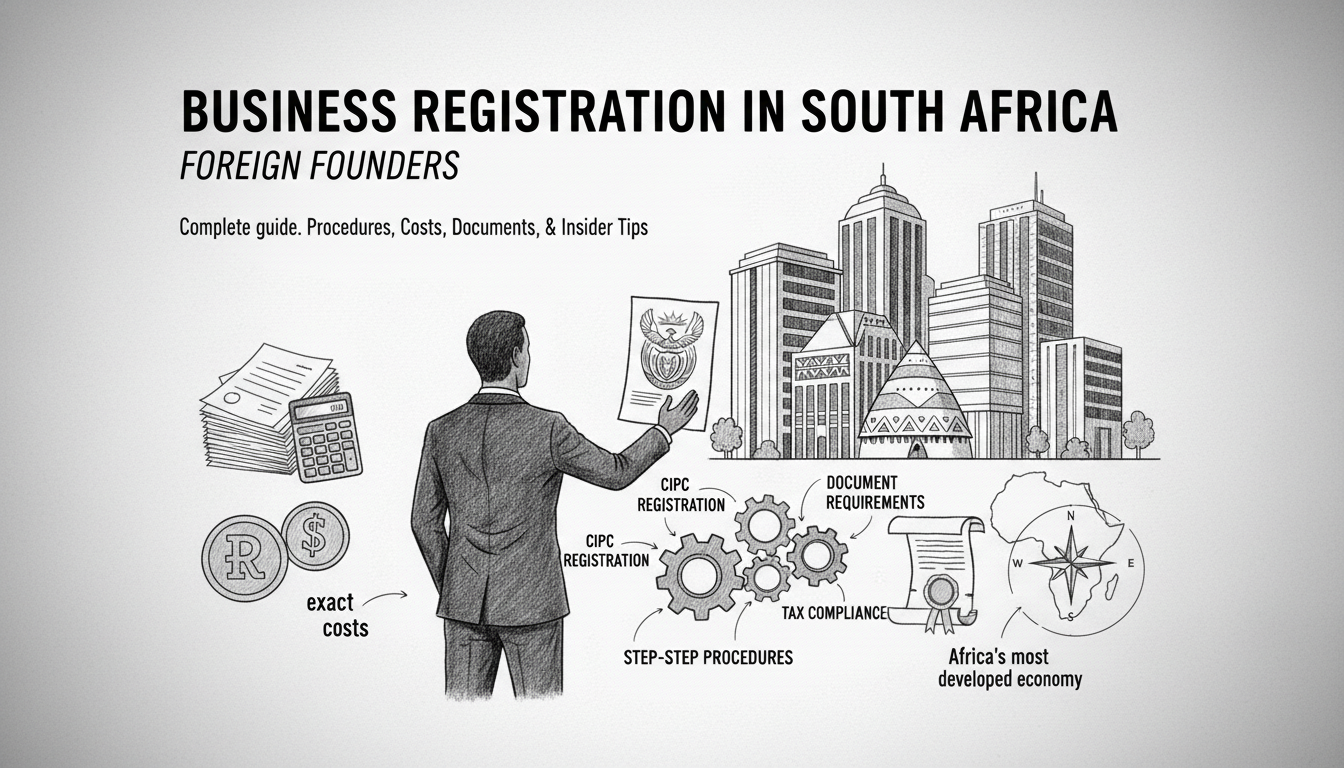
Starting a business in South Africa offers foreign founders access to Africa's most developed economy. This guide provides complete instructions for business registration in South Africa. You will learn the exact steps, costs, and requirements for establishing your company.
Foreign entrepreneurs find South Africa's regulatory framework well-structured. The process follows clear legal pathways. Understanding these procedures helps avoid common pitfalls.
Overview of South Africa's Business Environment
South Africa maintains a sophisticated financial system and strong legal protections. The country ranks as Africa's second-largest economy after Nigeria. Major sectors include mining, manufacturing, and financial services.
The government actively encourages foreign investment through various incentives. Special economic zones offer tax benefits for qualified businesses. Infrastructure supports commerce across urban and rural areas.
Step-by-Step Business Registration Process
Choose Your Business Structure
Select the appropriate legal entity for your venture. Options include private companies, public companies, and branch offices. Private companies suit most foreign founders starting small to medium enterprises.
Consider liability protection and tax implications when deciding. Private companies limit personal liability for business debts. This structure requires at least one director and one shareholder.
Reserve Your Company Name
Submit name options to the Companies and Intellectual Property Commission. Provide three preferred names in order of preference. The CIPC checks for existing trademarks and similar registered names.
Name reservations typically process within two business days. Approved names remain reserved for six months. Use this period to complete your registration paperwork.
Prepare Registration Documents
Gather required documents for CIPC submission. These include identity documents for all directors and shareholders. Foreign nationals must provide passport copies certified by notaries.
Prepare memorandum of incorporation outlining company rules. This document defines shareholder rights and director responsibilities. Include registered office address within South Africa.
Submit Application to CIPC
File registration documents through the CIPC online portal. Create an account on the CIPC website for electronic submissions. Pay registration fees using credit cards or electronic funds transfer.
The CIPC processes complete applications within five business days. You receive registration certificate and company number upon approval. These documents legally establish your South African company.
Register for Taxes
Apply for tax registration with the South African Revenue Service. All companies must register for corporate income tax. This process requires your CIPC registration documents.
Register for value-added tax if annual turnover exceeds R1 million. VAT registration becomes mandatory above this threshold. SARS provides tax reference numbers within 10 business days.
Open Business Bank Account
Visit South African banks with your company registration documents. Major banks include Standard Bank, FirstRand, and Nedbank. Each requires certified copies of director identification and company registration.
Banks verify business addresses and director backgrounds. Account opening typically completes within one week. You need this account for business transactions and salary payments.
Costs and Timeline
Business registration costs range from R175 to R475 for private companies. Name reservation fees cost R50 per application. CIPC registration fees start at R125 for standard processing.
Professional services add R2,000 to R10,000 for complete handling. Bank account opening carries no direct fees but requires minimum deposits. These deposits range from R1,000 to R5,000 depending on the bank.
The entire process takes three to eight weeks from start to finish. Name reservation requires two business days. CIPC registration processes within five business days. Tax registration adds another five to ten business days.
Bank account opening completes within one week after registration. Allow extra time for document preparation and courier services. International document authentication may extend timelines.
Requirements for Foreign Founders
Document Requirements
Provide certified copies of passports for all directors and shareholders. Foreign documents require authentication by South African embassies. Include proof of residential address for each director.
Submit memorandum of incorporation signed by all founders. This document must comply with South African company law. Include registered office address within South Africa.
Visa and Immigration Requirements
Obtain appropriate business visas before traveling to South Africa. Critical Skills Visas suit founders with listed qualifications. Business Visas require investment of R5 million in the South African economy.
Apply for visas at South African embassies in your home country. Processing takes four to twelve weeks depending on embassy workload. Include business registration documents with visa applications.
Financial Requirements
Demonstrate sufficient capital to establish and operate your business. Business Visa applications require proof of R5 million investment. Private company registration has no minimum capital requirement.
Prepare bank statements showing available funds. SARS may request financial documentation during tax registration. Banks require proof of funding sources for account opening.
Tips and Best Practices
Local Professional Support
Hire South African attorneys or business consultants. They understand local regulations and processing times. Professionals help navigate language barriers and cultural differences.
Choose firms with experience assisting foreign investors. Verify their track record with company registrations. Good consultants save time and prevent registration rejections.
Address Requirements
Secure a physical office address before registration. Virtual offices often fail CIPC verification processes. Consider serviced offices in major business districts.
Johannesburg and Cape Town offer numerous flexible workspace options. These addresses establish your business presence for official correspondence.
Compliance Planning
Understand ongoing compliance requirements from the start. Companies must file annual returns with CIPC each year. Maintain proper accounting records for SARS inspections.
Appoint a registered auditor if required by company size. Private companies often need audits when meeting specific criteria. Plan for these recurring obligations in your business budget.
Common Mistakes to Avoid
Do not underestimate processing times for document authentication. Foreign documents require notarization and embassy legalization. Start this process early to prevent delays.
Avoid choosing business names that describe services generically. The CIPC rejects names that lack distinctiveness. Select unique names that reflect your brand identity.
Frequently Asked Questions
What business structure works best for foreign founders?
Private companies (Pty Ltd) suit most foreign entrepreneurs. This structure limits personal liability for business debts. It requires only one director and one shareholder.
How long does the entire registration process take?
Complete registration typically requires three to eight weeks. Factors include document preparation and government processing times. Professional assistance can accelerate the timeline.
Can I register a company without visiting South Africa?
Yes, remote registration is possible using professional representatives. You need certified documents and a local registered address. Many service providers handle complete remote registrations.
What are the ongoing compliance requirements?
Companies must file annual returns with CIPC each year. Maintain proper accounting records and submit tax returns to SARS. Appoint auditors if your company meets specific criteria.
Do I need a South African business partner?
Foreign founders can own 100% of South African companies. No local partnership requirement exists for most business types. Certain sectors like banking have specific ownership rules.
What visa do I need to manage my South African company?
Business Visas require R5 million investment in the South African economy. Critical Skills Visas suit founders with listed qualifications. Apply through South African embassies abroad.
Can I use a residential address for company registration?
Yes, residential addresses work for company registration if zoned for business use. The CIPC accepts home addresses for small enterprises. Confirm local zoning regulations before proceeding.
Conclusion
South Africa offers foreign founders a structured business registration process. Follow the steps outlined to establish your company efficiently. Proper preparation ensures smooth entry into this dynamic market.
Begin with name reservation and document gathering. Proceed through CIPC registration and tax compliance. Complete the process with bank account establishment.
Consult local professionals for complex situations. They provide valuable guidance through regulatory requirements. Start your South African business journey with confidence today.