Kagera's climate agri plan: thin budgets, small plots

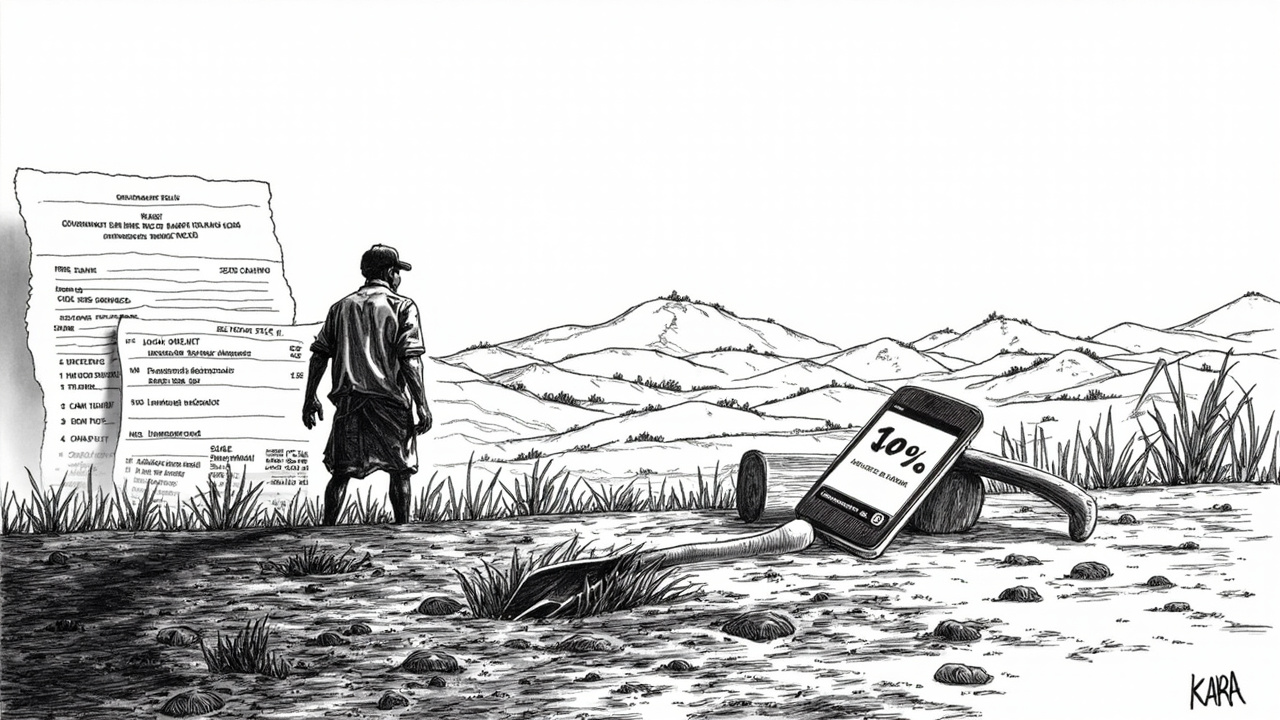
Kagera's regional commissioner, Colonel Yahya Kido, has announced strategies to cushion agriculture against climate variability. The message is reassuring: food reserves are sufficient, farmers will get support. But the headline hides a structural problem that no amount of regional cheerleading can fix.
The smallholder math doesn't add up
Over 95% of Tanzanian farmers work plots under two hectares, according to World Bank data. These are subsistence operations with thin margins. Climate-smart farming requires investment: drought-resistant seeds, irrigation kits, soil sensors. Most smallholders cannot afford a monthly subscription for a precision-farming app, let alone the hardware.
The Tanzanian government allocates less than 10% of its national budget to agriculture, per the Climate Knowledge Portal. That is below the 2014 Malabo Declaration minimum of 10%. The gap between policy talk and budget reality is not unique to Kagera, but it is acute here. Kido's plans may involve distributing inputs or training extension officers, but without a meaningful increase in public spending, the scale will remain small.
What the press release doesn't say
The official announcement positions Kagera as proactive. Climate-smart agriculture is not just about planning; it is about execution at village level. The research context shows that neighbouring Kenya has dedicated frameworks running from 2017 to 2027 (Kenya CSA Implementation Framework). Tanzania has no equivalent national strategy with a clear budget line. Kagera's initiative, while welcome, risks being a pilot that never scales.
Investors looking at Tanzania's agri-tech space should watch two things. First, whether the government backs its words with procurement contracts for digital solutions. Second, whether any private sector actor can build a delivery model for farmers who earn less than $2 a day. SaaS pricing models will fail here unless they are subsidised or bundled with credit. The fintech opportunity is in last-mile finance, not in selling software licenses.
Who loses, who quietly benefits
Large commercial farms, the minority, will absorb whatever government support arrives. Smallholders will see little change unless NGOs or donor programmes fill the gap. The real winners may be input suppliers who get bulk procurement deals, and firms that offer low-cost, pay-per-use services rather than annual subscriptions.
The risk for Kagera is that the announcement raises expectations without changing material conditions. Farmers hear 'climate-smart' but cannot afford the inputs. The region ends up with another policy document, not a transformation. That is the pattern across much of Tanzania's agricultural policy over the past decade.
Expect the fine print to matter more than the headline. And expect the gap between rhetoric and resources to remain the real story.