Senegal markets test payments as Royal Air Maroc expands fleet

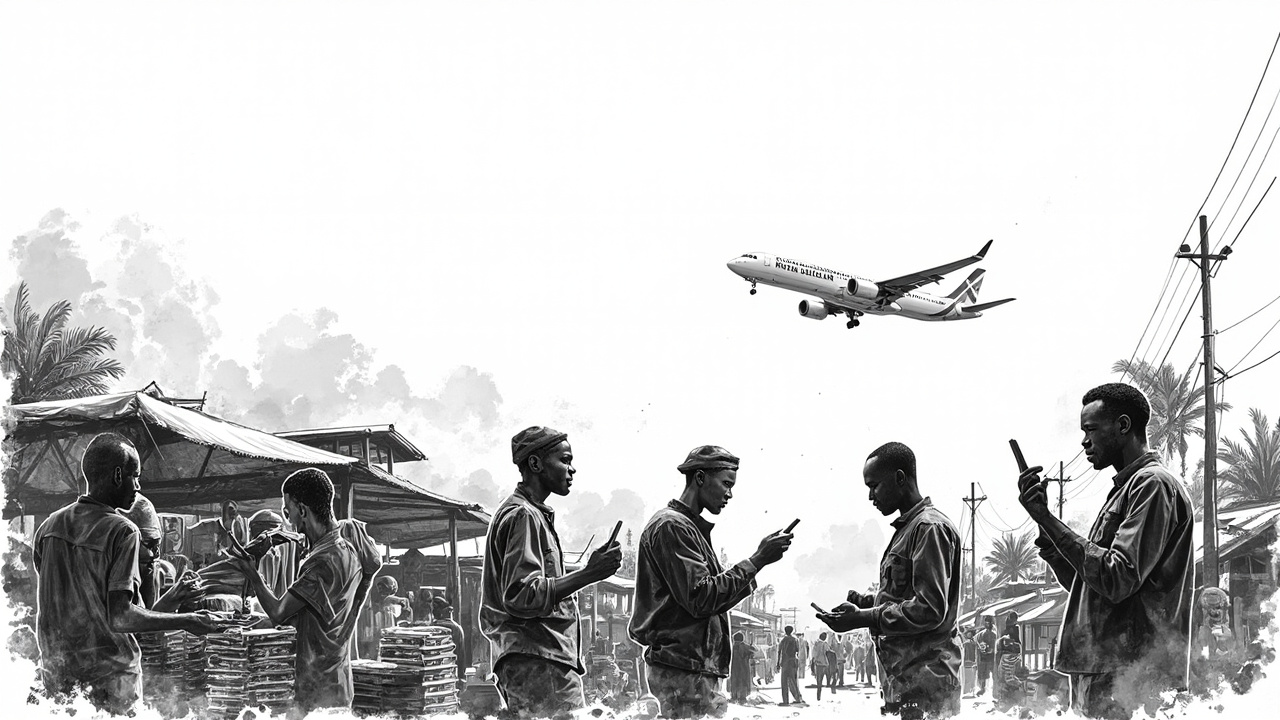
Royal Air Maroc received its first Boeing 737-8 MAX on March 31, 2026, under a six-aircraft lease from Aviation Capital Group (ACG) according to PR Newswire. The airline's fleet now totals 66 planes. This capital expenditure looks like a standard fleet renewal. The real story is 2,500 kilometers southwest in Dakar. Senegal's payments infrastructure is not ready for the surge in regional travel this expansion signals.
Royal Air Maroc's new jets will connect more West Africans. The 737-8 MAX has the range for non-stop Dakar-Casablanca-Lagos circuits. That means more remittance corridors and cross-border trade.
It also means more pressure on Senegal's mobile money agent networks. The BCEAO, the central bank for the West African CFA franc zone, pushes for interoperability. The reality is float management chaos. Agents in Pikine and Grand Dakar already struggle with liquidity imbalances. Adding high-frequency, low-value travel payments will break some of them.
float management and dormant accounts
Interoperability sounds good in a policy paper. In practice, it shifts risk to the agent. When a Wave user sends money to an Orange Money wallet in Thiès, the agent's float gets trapped. The system promises settlement later. The agent needs cash now. This mismatch creates network fragility. A travel boom means more instant, cross-network transactions. It means more agents needing to borrow from informal lenders to cover float shortfalls. The sector's growth hides its operational precarity.
Regulators focus on KYC for account opening. They ignore dormant account ratios. In Senegal, an estimated 30% of registered mobile money accounts see no transaction in a 90-day period. That is a liability, not an asset. It ties up system capacity and agent attention for zero revenue. A new passenger flying weekly from Blaise Diagne International Airport needs instant, reliable cash-out. They will find agents busy reactivating dormant SIMs for compliance checks. The BCEAO's prudential rules look strong on paper. The enforcement gaps are coastal-wide.
the investor angle
This is a liquidity problem, not a technology one. Investors in Senegalese fintechs must look past user growth metrics. They must ask about net float position and agent churn rates. A payments platform can have a million users. If its agents are liquidity-constrained, it cannot scale. The arrival of efficient, leased jets like the 737-8 MAX with CFM LEAP engines will increase transactional velocity per MR Business Today. That velocity will hit a bottleneck at the cash-in/cash-out point. The first-order effect is more convenient travel. The second-order effect is payment system stress. The entity that quietly benefits is the informal liquidity wholesaler. They finance the agent network when the formal system lags.
Expect consolidation among smaller payment service providers. They cannot finance the float for a regional travel spike. The risk is a system failure during peak travel seasons like Korité. A stranded traveler unable to cash out is a systemic risk event. It draws regulatory scrutiny that hurts all players. My verdict: invest in payment platforms with owned agent networks and strong balance sheets. Avoid those reliant on independent agents and thin float. The jets are landing. The payments system is not ready for the passengers they bring.