CEMAC's 2% GDP market is the real story after COLFINI 2

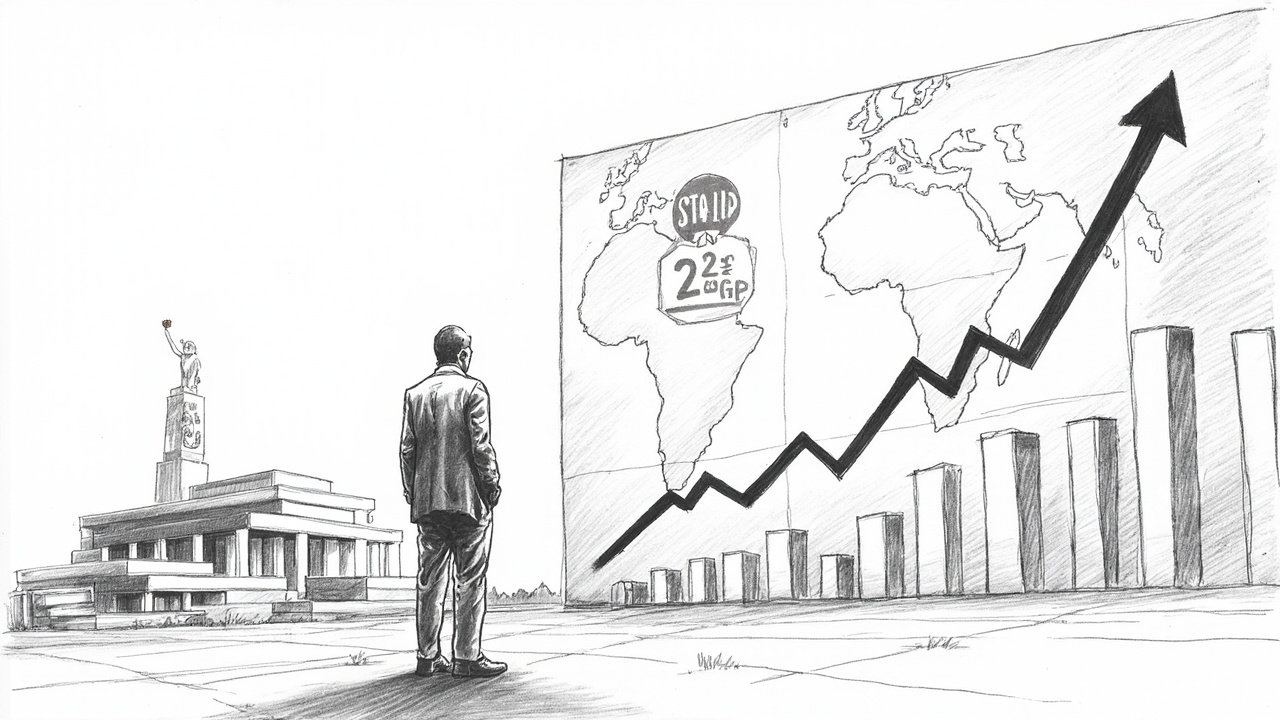
COLFINI 2 wrapped in Yaoundé with a familiar refrain: the CEMAC financial market is mature. The numbers say otherwise. At 2% of regional GDP, it is not a market. It is a rounding error.
Two days of speeches from Cameroon's finance ministry, regulators, and project sponsors produced one honest data point. The CEMAC financial market represents just 2% of regional GDP, according to participants at the conference. Compare that with Nigeria's bond market at roughly 12% of its GDP or Kenya's at 15%. The gap is not incremental. It is structural.
The maturity claim doesn't match the math
The official narrative says the institutional framework is ready. The BEAC has harmonized listing rules, standardized issuance procedures, and created a regional securities regulator. But none of that moves the needle if the investor base is absent. CEMAC's institutional investors, pension funds, insurance companies, are tiny. Most savings sit outside the formal financial system. The 2% figure is actually generous: it includes short-term bank debt masquerading as market instruments.
Infrastructure projects need long-term, local-currency financing. The CEMAC region has plenty of projects, road corridors, energy interconnections, port upgrades. What it lacks is a pool of buyers willing to hold 10-year bonds. Foreign investors won't touch CEMAC sovereign paper because liquidity is nonexistent. Regional banks are already overexposed to sovereign risk. The result: projects either stall or rely on Chinese loans and multilateral development finance.
What COLFINI 2 didn't talk about
The conference agenda didn't address the real bottleneck: secondary market liquidity. A primary market can issue bonds, but without a liquid secondary market, investors treat them as illiquid assets. They demand a premium. Issuance costs stay high. The Central African CFA franc peg to the euro adds another layer of rigidity. Devaluation risk is low, but currency convertibility restrictions make it hard for foreign funds to exit.
This is not a funding problem. It is a market design problem. CEMAC needs a market maker of last resort, probably the BEAC itself, to provide liquidity. That would require the central bank to accept a broader range of collateral and to signal that it will buy bonds during stress. No one at COLFINI 2 proposed that. Too politically sensitive.
The investor takeaway
Expect CEMAC infrastructure financing to remain reliant on bilateral lenders and export credit agencies for the next three to five years. The regional bond market will grow slowly, but not fast enough to fund the pipeline. Investors should assume that any CEMAC infrastructure project claiming local-currency financing is either a bank loan with a bond label or a development finance institution (DFI) backstop. The 98% of regional GDP that sits outside the market will take a decade to shift.
The risk is that governments, frustrated by slow capital market development, start pushing for mandatory investment quotas, forcing pension funds and insurers into infrastructure bonds. That would create a captive buyer base but distort pricing and risk allocation. It would be a short-term fix with long-term consequences.
COLFINI 2 was long on ambition. But 2% of GDP is not an infrastructure finance engine. It is a warning.