Lagos Sets 250MW Data Centre Target, Who Pays for the Power?

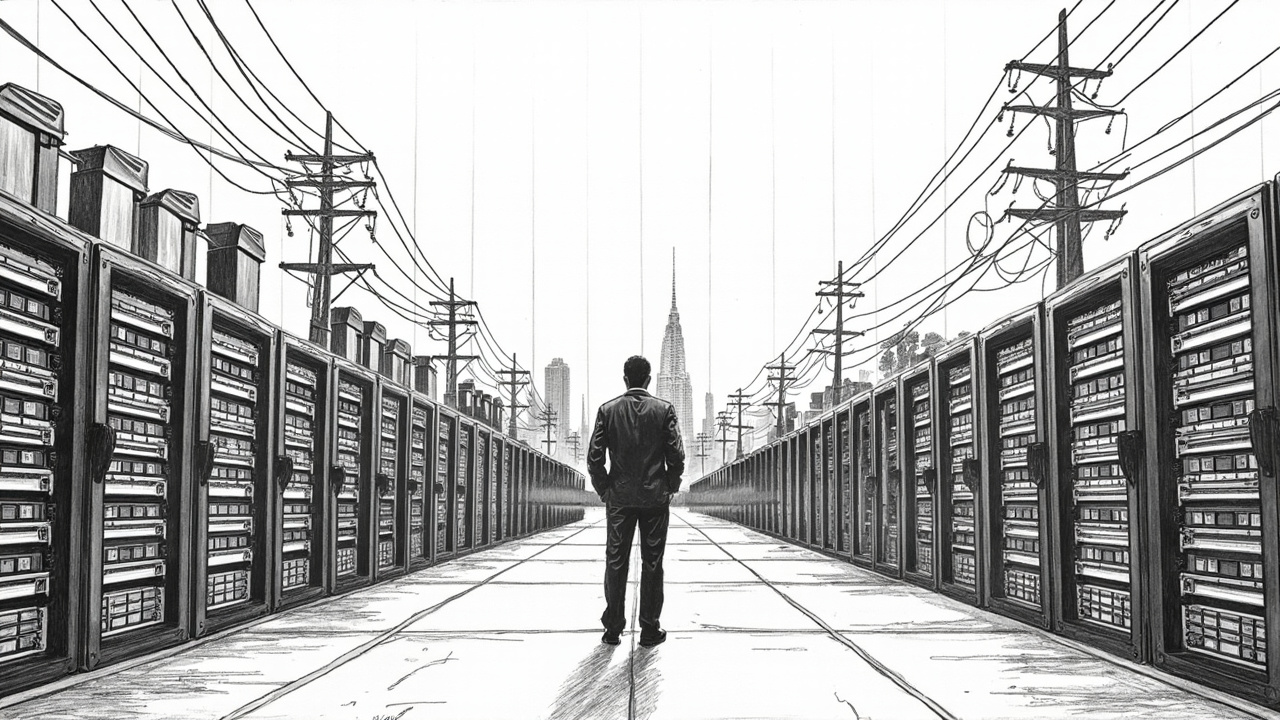
Lagos state wants 250MW of data centre capacity. That is roughly one-third of the current total data centre power capacity on the entire African continent. The ambition is enormous. The reality of Nigeria’s power sector is brutal.
The grid is the story
Nigeria generates about 4,000MW reliably for the national grid, half of which is lost in transmission and distribution. A single 250MW data centre campus would need dedicated power, either gas-fired turbines or large-scale battery storage paired with solar. Both options require dollars. Lagos has no functional gas pipeline network to Ikeja’s industrial zones. Importing generators and battery cells eats forex at a time when the naira has lost 70% against the dollar over the past 18 months.
The state government is banking on private investment. But the return profile for hyperscale data centres in Nigeria looks shaky. Power costs alone account for 40-50% of operating expenses for a tier-III facility. With commercial electricity tariffs rising 300% since 2024 subsidy cuts, the unit economics demand long-term power purchase agreements (PPAs) at sub-12 cents per kWh, hard to secure when generation is unreliable.
Nigeria's data centre rack market was worth $46.37 million as of the latest estimates, with a forecast to reach $183 million by 2030, according to industry estimates. That growth is real, driven by cloud migration from MTN, Airtel, and fintechs. But 250MW of capacity would require capital expenditure north of $2 billion, roughly 10x the current annual investment in the sector.
Connectivity and the funding gap
Separately, the US government is backing a study for 1,500 new base stations across West Africa. The political signal is clear: Washington wants to counter Chinese telecom infrastructure financing in the region. The study will likely recommend open RAN and shared passive infrastructure. For Nigeria, more base stations increase data demand, which in turn feeds the data centre build-out. But the two projects are not linked. The base station study is early stage; actual deployment could take 5-7 years.
The risk for investors is timing. Lagos’ data centre target assumes that connectivity demand will materialise fast enough to fill racks. If the base station rollout lags, or if Nigerian operators continue to struggle with site seizures and diesel theft, utilisation rates stay low. Empty racks kill returns.
Local operators like Rack Centre and MainOne (Equinix) will benefit from the government’s marketing push. Land prices around Lekki and Epe have already risen. Construction firms and solar-battery vendors also get a tailwind. But Nigerian power distribution companies that cannot offer reliable supply will lose – any data centre operator forced to rely on diesel for 20+ hours a day will see EBITDA margins collapse. Lagos state also risks losing if it subsidises land or power without securing anchor tenants. The budget is already stretched thin.
Lagos’ 250MW ambition is a vote of confidence in Nigeria’s digital economy. But the power gap is not a detail, it is the whole problem. Investors should track two things: the first signed PPA with a private power producer, and the timing of the US base station study’s transition to tenders. Until those land, this is a vision, not a pipeline.