Nigeria tech watches as Kenya's switch deal tests payment limits

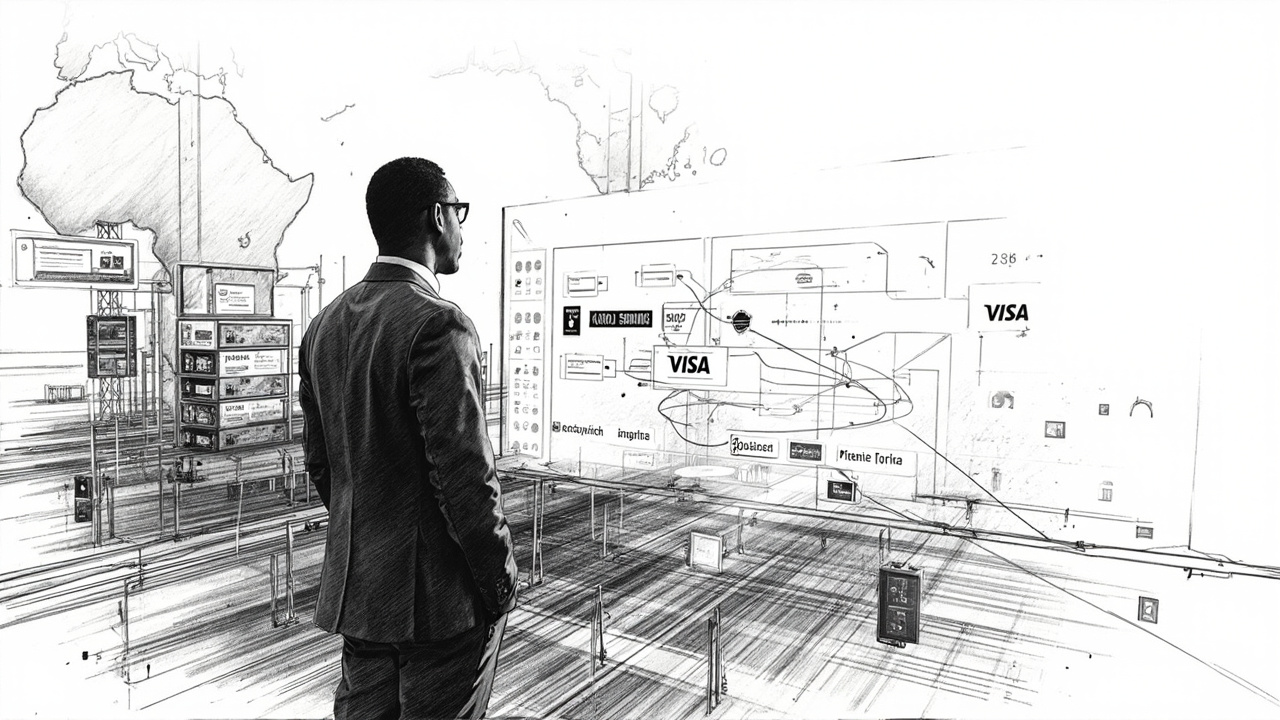
The Kenswitch-Visa MoU signed this week is a Kenya story with sharp lessons for Nigeria. Visa gains a testing ground for its technology in a competitive national switch environment. For Nigeria's own crowded payments sector, the deal questions the real value of interoperability pacts beyond press releases.
The April 3 memorandum links Visa's global rails to a switch connecting over 30 Kenyan financial institutions. National Bank of Kenya joined the same network the same day according to National Bank of Kenya. The photo-op with executives from both sides signals Visa's push for deeper infrastructure integration in East Africa. It is not charity. Visa gets direct access to transaction data and routing logic in a live market. This is a pilot for a broader play.
float management and dormant account risks
For investors, the critical angle is sustainability. Connecting switches is one thing. Managing the float behind millions of low-value transactions is another. Nigeria's own NIBSS and plethora of fintech switches face the same physics. Agent networks require massive liquidity buffers. When transaction volumes spike, float drains cause settlement failures. I have seen this break overnight in Lagos. The Central Bank of Nigeria (CBN) knows it. Their recent guidelines on switching and processing hint at coming capital requirements.
The Kenyan MoU does not solve the dormant account problem. In Nigeria, over 40% of registered mobile money accounts are inactive. They sit on ledgers, costing maintenance but generating zero revenue. Connecting more switches to dead accounts is a technical achievement with questionable economics. The real test for Kenswitch-Visa will be active user growth, not connection count.
interoperability claims versus KYC gaps
Interoperability sounds great in an MoU. In practice, it exposes weak links in the chain. Kenya's deal brings Visa into a system where local KYC standards may not match global compliance demands. Nigeria faces identical pressure. The Economic and Financial Crimes Commission (EFCC) recently flagged lax KYC in domestic switches as a fraud vector. When you connect systems, you inherit the weakest compliance regime.
Visa's involvement suggests they see a path to standardization. The risk for local players like Kenswitch is ceding control over rules and tariffs. For Nigerian switches, this is a warning. Foreign technology partners eventually dictate terms. The CBN's push for a national domestic card scheme (the AfriGo card) is a direct response to this dynamic.
Investors should watch two things. First, the capital call. Scaling these networks requires expensive infrastructure. Second, regulatory patience. The Central Bank of Kenya and Nigeria's CBN will tighten oversight as systems interconnect. Expect new liquidity and reporting rules within 12 months.
The quiet winner is Visa. They get a low-cost lab. The loser is any local switch that thinks a global partnership substitutes for solving basic unit economics. In Nigeria, where fintech valuations still assume infinite growth, that is a sobering thought.