Fixr's ₦5bn solar model dodges Nigeria's tax dragnet

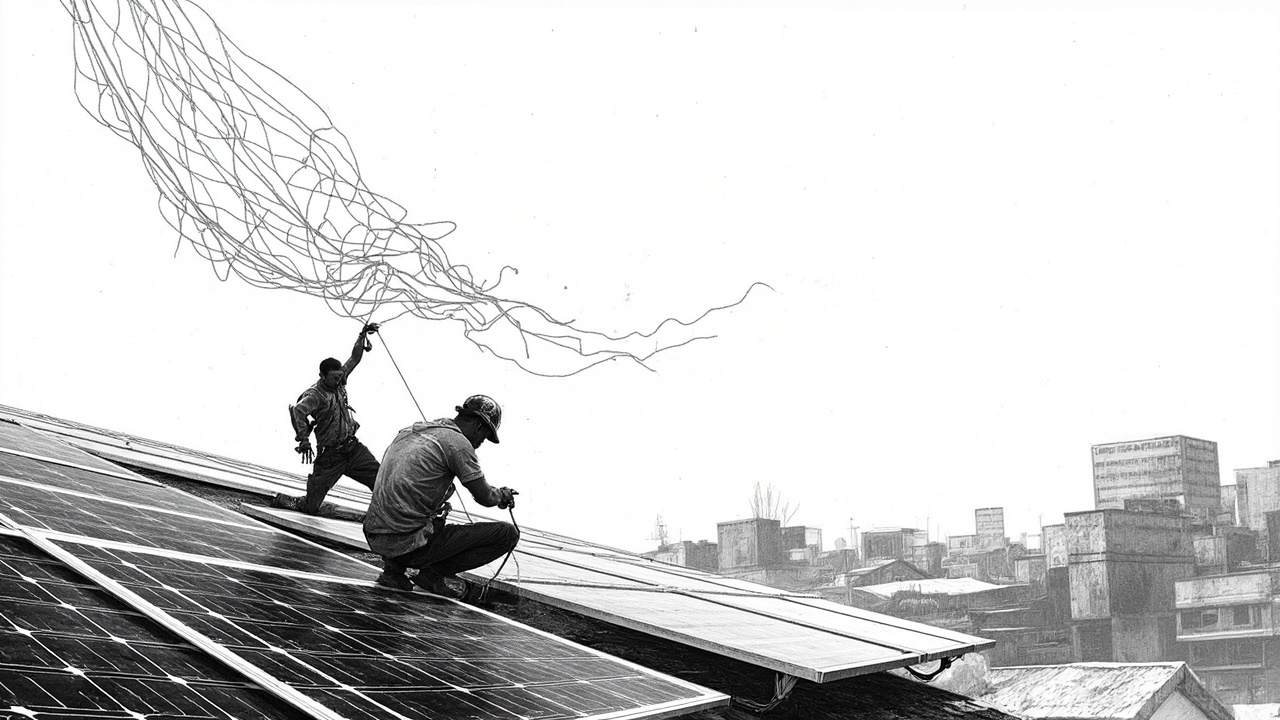
Fixr’s financials read like a policy failure. The Nigerian service platform processed nearly ₦5 billion in solar financing and employs 400 technicians without taking venture capital. That is a ₦5 billion economic activity operating largely in the shadows of the formal tax system. For investors, the real story is not the company’s bootstrapping. It is the systemic inability of the Federal Inland Revenue Service (FIRS) to capture value from a massive, informal contractor economy. More than half of Nigeria’s adult population has no bank account, and only 2% have access to credit according to Rest of World. Platforms like Fixr are building markets where traditional banks failed. They are also creating a vast, hard-to-tax revenue pool.
the fixr workaround and the firs blind spot
Fixr’s contractor-led model is a brilliant adaptation to Nigeria’s reality. It sidesteps the credit crunch and taps into an underemployed workforce. But this operational genius creates a headache for the tax authority. How does the FIRS apply Value Added Tax (VAT) or Company Income Tax to thousands of micro-transactions between homeowners and independent technicians? The current system is not built for it. This is not a niche issue. The International Finance Corporation (IFC) notes that crowding in the private sector is critical for job creation in Nigeria per IFC analysis. Yet if that private sector growth happens off the books, the state gains no fiscal strength from it.The second-order effect is a vicious cycle. The government cannot fund reliable public services without a broader tax base. That failure reinforces the need for private solutions like Fixr’s solar installations. The company fills a gap the state left open. Every naira processed through its platform is a naira that likely bypasses standard VAT channels. The FIRS has made digital assets a priority, but the physical, hyper-local service economy remains a compliance maze.
the crushing cost of ‘bad vibes’
This is not just a missed opportunity. It is an active drain. Nigeria pays a ‘Bad Vibes Tax’ of 2, 3% on its debt service due to negative market perception, costing an extra ₦1.5, ₦2.5 trillion annually according to The Cable. Weak tax collection from high-growth informal sectors is a core reason for that premium. Investors see a state unable to harness its own economic energy. They demand higher yields on government bonds to compensate for perceived fiscal weakness. That strangles the budget. While global VCs look at Nigeria’s tech potential, they also see this structural flaw. Regulatory clarity exists for venture capital as noted by Mondaq, but the broader business environment remains hampered by the state’s revenue problem.Expect no quick fix. The FIRS is technologically outmatched by the scale and fragmentation of the informal sector. Fixr’s success highlights a profitable market. It also highlights a persistent leak in the treasury. Until the CBN and FIRS develop a feasible framework for taxing platform-mediated micro-services, growth in this sector will continue to bypass the exchequer. That means more debt, higher yields, and a perpetual ‘Bad Vibes Tax’ on the entire economy. The investor takeaway: back businesses that thrive in this gap, but price in the systemic risk that Nigeria’s fiscal weakness will eventually demand a clumsy and disruptive correction.