Policy
Nigeria's Naira-for-Crude Policy Masks Fiscal and Refinery Risks

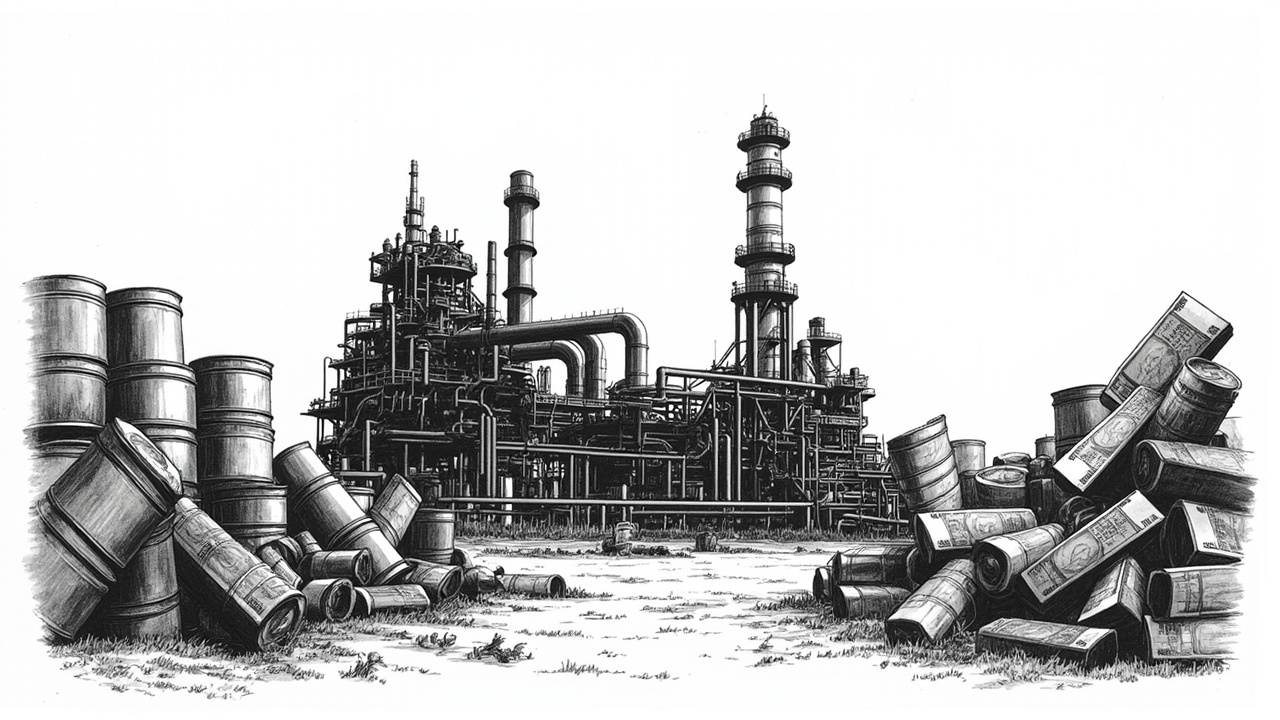
President Bola Tinubu's directive to pay for NNPC crude with naira at the Dangote Refinery is a domestic currency play, not a global supply shield. The policy, approved in July 2024 and launched that October, redirects oil within Nigeria's border. It does not import new barrels. The official narrative ties it to Middle East instability, but the arrangement was in motion before the latest Iran-Israel-US conflict according to State House reporting. For investors, this is a fiscal liquidity maneuver with concentrated benefits and systemic currency risks.
the mechanics: a closed-loop for Dangote
The naira-for-crude scheme is not a broad market reform. It is a bilateral agreement between the state oil company and a single private conglomerate. A technical committee, including the Minister of Finance, oversees the initiative per PM News Nigeria. The NNPC, which operates as a commercial entity and a quasi-regulator, essentially sells crude to itself for naira before delivering it to Dangote's plant. This creates a closed financial loop that bypasses dollar conversion. It guarantees feedstock for Africa's largest refinery but does nothing for other refiners or for increasing national crude production. The policy's design reveals a priority: secure Dangote's operational viability over creating a competitive, multi-player market.the hidden pressure on CBN liquidity
The immediate risk is central bank financing. Paying for crude in naira requires the NNPC to have naira liquidity. If the company's naira reserves are insufficient, the transaction may rely on ways and means advances from the Central Bank of Nigeria (CBN). This monetizes oil revenue directly, a process historically linked to inflation. The federal government has already stated it will not intervene to control resulting petrol price increases. That pass-through mechanism transfers currency risk directly to consumers and businesses. For the CBN, managing inflation while accommodating this new domestic demand for naira is a delicate, perhaps impossible, task. The policy could undermine the very currency it aims to promote.investor takeaway: look beyond the headline
Investors should treat supply security claims with skepticism. The real security is for Dangote's balance sheet, which gains a predictable, forex-hedged input cost. The NNPC gains a reliable domestic buyer, but its role as both player and referee creates governance concerns documented by resource governance analysts. For portfolio managers, watch for secondary effects: potential naira liquidity tightening, increased pressure on parallel exchange rates, and no material change in Nigeria's external dollar earnings from oil. The policy sidelines international oil companies like TotalEnergies and Chevron, which continue to operate in dollar terms. This inward turn may discourage the foreign investment needed to reverse the sector's production decline. The naira-for-crude policy is a temporary fix for a specific player, not a structural solution for Nigeria's energy sector.Companies Mentioned
Nigerian National Petroleum Company (NNPC)Dangote Refinery
TOPICS
CBN liquidityfiscal monetizationenergy sector governancedomestic currency riskrefinery feedstockquasi-regulatorinflation pass-through