PDP Leaders Consult Former VP Sambo Amid Party Crisis

PDP Leadership Seeks Sambo's Counsel
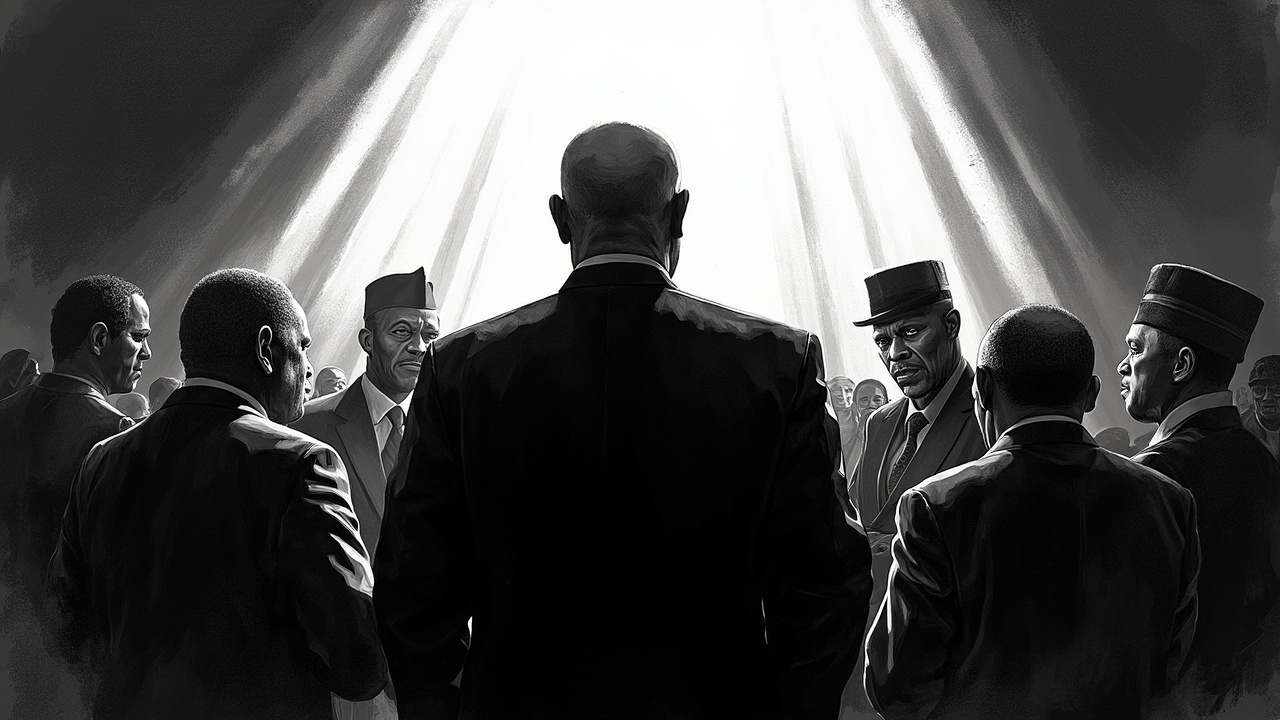
Senior leaders of Nigeria's People's Democratic Party met with former Vice President Namadi Sambo in Abuja this week. The closed-door consultations aimed to resolve internal party disputes and develop a strategy for the 2027 general elections. Party officials described the meeting as part of broader reconciliation efforts. The PDP has faced significant factionalism since its 2015 electoral defeat. Several state chapters remain divided over leadership and resource allocation.
The 2027 Electoral Landscape
Nigeria's next presidential election is scheduled for February 2027. The Independent National Electoral Commission will begin voter registration updates in early 2026. The PDP currently controls 13 of Nigeria's 36 state governorships. The party lost the presidency in 2015 after 16 consecutive years in power. It failed to regain the position in both 2019 and 2023 elections. The ruling All Progressives Congress holds 20 state governorships and the presidency. Political analysts note that opposition unity remains fragile ahead of the 2027 contest.
Why It Matters
Political stability directly affects Nigeria's economic environment. The PDP's internal crisis creates uncertainty for businesses planning long-term investments. Nigeria's economy grew by 2.74% in 2023 according to National Bureau of Statistics data. The Nigerian Stock Exchange All-Share Index gained 45.9% in 2023. Foreign direct investment fell to $698 million in 2023 from $1.06 billion in 2022 according to the National Bureau of Statistics. A unified opposition could pressure the ruling party on economic reforms. The 2023 elections saw violence in Lagos, Kano, and Rivers states that disrupted business operations.
What Businesses Should Watch
Monitor PDP reconciliation efforts through the party's National Working Committee announcements. Watch for policy statements from PDP governors in Lagos, Rivers, and Delta states. These states account for approximately 40% of Nigeria's non-oil GDP. Track regulatory changes from agencies like the Nigerian Upstream Petroleum Regulatory Commission and the Central Bank of Nigeria. Political uncertainty may affect the Nigerian Stock Exchange listings of companies like Dangote Cement, MTN Nigeria, and Zenith Bank. The Manufacturers Association of Nigeria reported that 767 manufacturing companies closed in 2023 due to economic challenges. The Nigerian electricity Regulatory Commission approved a 240% tariff increase for Band A customers in April 2024. Such policy shifts often follow political calculations.
Economic Implications of Political Realignment
Business leaders express concern about policy continuity. The Nigerian Economic Summit Group identified political instability as a top constraint to growth in its 2023 report. The Corporate Affairs Commission registered 245,000 new businesses in 2023. This represents a 6.5% increase from 2022. However, business closures also reached record levels. The National Bureau of Statistics reported unemployment at 4.1% in Q3 2023. Youth unemployment remained at 7.2% in the same period. Political parties often make job creation promises during election cycles. The PDP's "Power to the People" manifesto emphasizes agricultural development and infrastructure investment.
The Path Forward for PDP
Party officials indicate that further consultations will occur throughout 2024. The PDP plans to hold its national convention in 2025. Former Vice President Sambo served from 2010 to 2015 under President Goodluck Jonathan. He maintains influence in northern political circles, particularly in Kaduna State. The PDP needs to strengthen its presence in northern regions where it lost significant ground in recent elections. The party's Board of Trustees will meet next month to discuss constitutional amendments. These changes could affect candidate selection processes for the 2027 elections.
Market Reactions and Business Planning
Financial markets show limited immediate reaction to political developments. The Nigerian Stock Exchange maintains normal trading hours. However, prolonged political uncertainty could affect investor confidence. The Central Bank of Nigeria's Monetary Policy Committee raised interest rates to 24.75% in March 2024 to combat inflation. Inflation reached 33.2% in March 2024 according to National Bureau of Statistics data. Businesses should develop contingency plans for potential election-related disruptions. The Lagos Chamber of Commerce and Industry advises members to maintain flexible supply chains. Companies like Nestlé Nigeria, Unilever Nigeria, and Nigerian Breweries typically adjust marketing strategies during election cycles.