Nigeria's ₦58trn Budget: Expansionary Shift or Wishful Thinking?

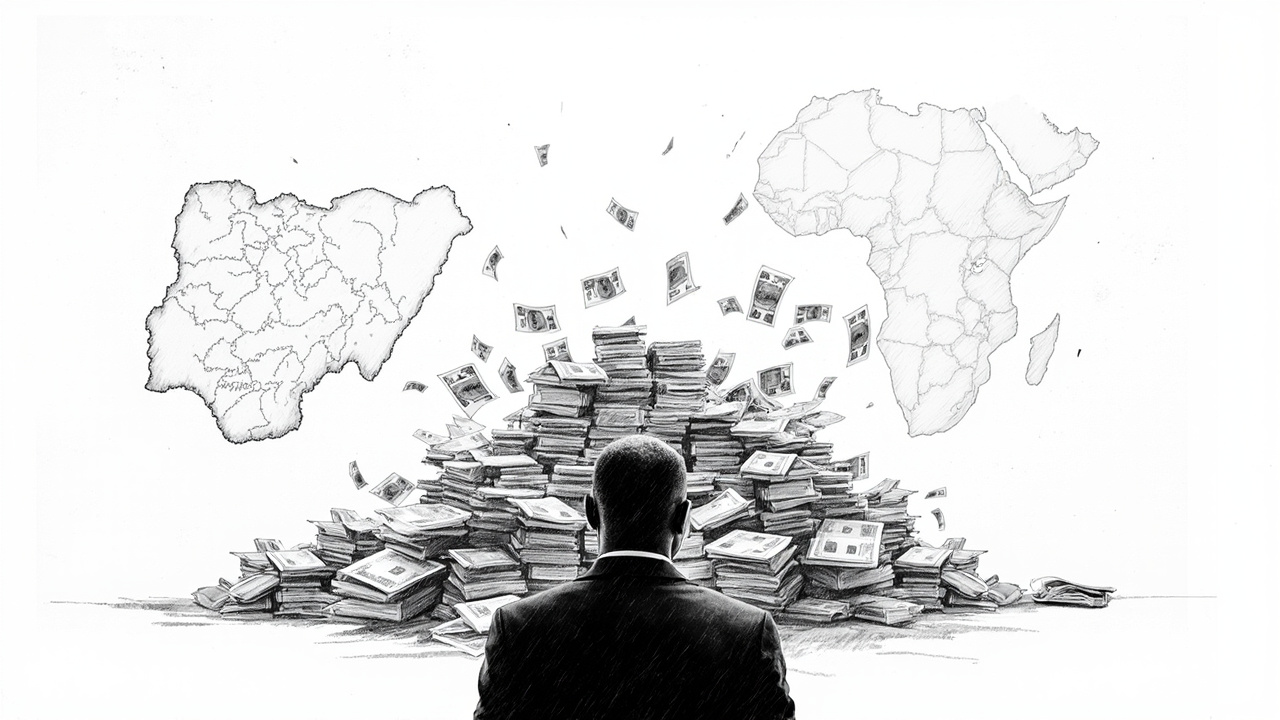
President Bola Tinubu's ₦58.18 trillion budget for 2026 is being sold as a pivot from austerity to growth. Analysts quoted by Nairametrics see it as an expansionary, infrastructure-led strategy. But Nigeria has tried this before. The question is whether the government can deliver without blowing up the fiscal deficit or crushing the naira.
Tinubu presented the Appropriation Bill to a joint session of the National Assembly on 19 December 2025, calling it a "Budget of Consolidation, Renewed Resilience and Shared Prosperity" according to the State House. At ₦58.18 trillion (~$41.5 billion per BBC Pidgin), this is a nominal jump from the 2025 budget. The administration says it will prioritise capital spending. But talk is cheap when debt service already eats a third of revenue.
The debt trap tightens
Nigeria's fiscal reality: revenue barely covers recurrent costs. The 2026 budget assumes aggressive non-oil revenue growth. That's a bet on tax reforms that have stalled in the National Assembly and on oil production remaining above 2 million barrels per day, a target Nigeria has missed for years. If revenue falls short, the deficit will widen beyond the already high projection. The Central Bank of Nigeria (CBN) would then face pressure to monetise, which means more inflation and more naira weakness. Investors holding local-currency bonds should watch the next CBN MPC vote closely. The risk is real.
Infrastructure and regional credibility
Tinubu's team talks up roads, rail, and power. But Nigeria's capital budget utilisation rate has hovered below 70% in recent years. Bureaucracy, contractor financing gaps, and state-level absorption problems are structural. A bigger allocation does not mean better delivery. Funds that aren't spent become extra liquidity in the banking system, which the CBN then has to mop up. That's déjà vu from 2024-2025. Infrastructure contractors with strong government ties will benefit from contract awards, but the real payoff depends on execution, and history says don't bet on it.
This is not just a Nigeria story. AfCFTA's success relies on Africa's largest economy being a stable anchor for trade and investment. A budget that signals expansion but lacks credible revenue sources sends the wrong signal to the continent. If Nigeria's fiscal position deteriorates, its ability to honour AfCFTA tariff commitments and invest in cross-border infrastructure (like the Lagos-Abidjan corridor) weakens. Other member states will hesitate to liberalise fully when Nigeria's own house is unsteady. The policy harmonisation rhetoric rings hollow when the budget numbers don't add up.
The bottom line for investors
Expect higher naira volatility in the second half of 2026 as deficit monetisation pressures build. Equity markets may get a short-term lift from infrastructure stories, but the real risk is a debt-service spiral that crowds out productive spending. Foreign portfolio investors should demand a premium for holding Nigerian assets. Domestic investors should ask how the government plans to close the revenue gap without raising taxes that choke growth. The budget is ambitious. Credible? That's the bet.