Morocco's 100K merchant payment plan: domestic win, AfCFTA miss

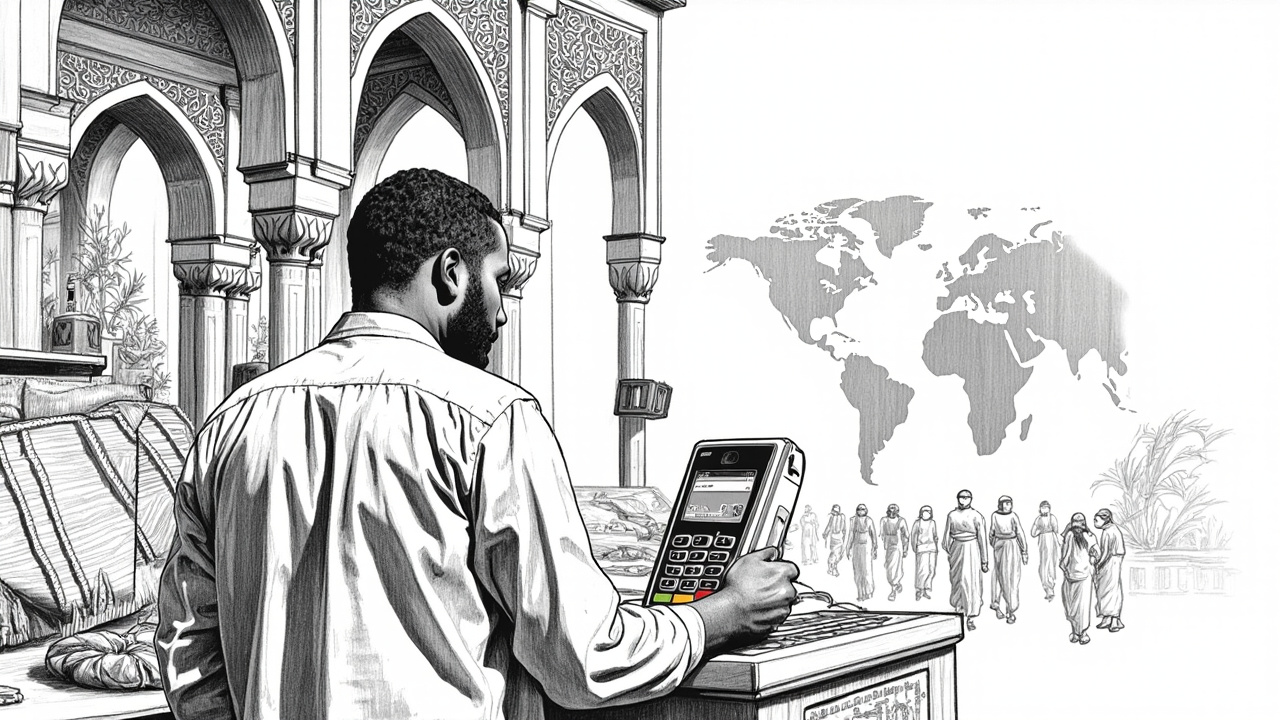
Morocco's domestic payment infrastructure is getting a boost. Al Barid Bank, Barid Cash, B2B platform Chari, and the Ministry of Industry and Commerce signed a partnership at the National Trade Forum in Marrakech to equip over 100,000 local merchants with electronic payment acceptance solutions, according to LesEco.ma. Minister Mezzour called for a "rise in innovation" in commerce despite structural obstacles, per LNT.ma. Good for Morocco's cashless shift. But for investors betting on pan-African trade, the real question is whether this helps or hinders AfCFTA implementation.
What the deal actually does
The partnership targets neighbourhood shops called 'hanout', the backbone of Morocco's retail scene. Al Barid Bank, the state-owned postal bank, and Barid Cash, its mobile money network, will deploy acceptance terminals. Chari, a fintech already digitising B2B supply for small retailers, handles the merchant onboarding and data layer. The Ministry provides policy cover. The goal is 100,000 equipped merchants. No timeline was given, but Minister Mezzour's April 28 statement suggests urgency. This is a public-private push to reduce cash dependency and improve transaction visibility.
The missing piece: cross-border payment rails
Morocco's payment infrastructure remains domestically siloed. The new terminals likely use Bank Al-Maghrib (BAM)-regulated local schemes and the CMI (Centrale Monétique Interbancaire) network. That works for in-country purchases. But for Moroccan businesses trading under AfCFTA, exporting textiles to Senegal or importing machinery from Kenya, the payment friction is brutal. Currency convertibility is slow. Settlement can take days. There is no single regional payment system equivalent to SEPA or even the East African cross-border mobile money corridors. Morocco's push reinforces domestic efficiency without addressing the interoperability gap. That is a missed opportunity. The risk is that Morocco deepens its internal digital economy while its external trade bottlenecks stay wide open.
Who loses and who quietly benefits
Local fintechs like Chari win. More merchants on digital rails means more data, more credit scoring potential, more B2B lending. Al Barid Bank wins, it captures transaction fee flows and deepens its role as the state's digital agent. But regional payment providers, such as M-Pesa's cross-border unit, pan-African settlement platforms like NIBSS or the African Export-Import Bank's PAPSS, lose if Morocco's network stays closed. Moroccan exporters lose too. They face higher transaction costs when trading with sub-Saharan Africa than their peers in Ghana or Kenya, where mobile money interoperability already covers multiple countries. The second-order effect: AfCFTA's promise of tariff-free trade gets undermined by payment friction that is entirely solvable.
This suggests the Moroccan government chose domestic scale over regional integration. That's pragmatic for now, but investors should watch whether BAM opens the new acceptance network to regional payment schemes. If it doesn't, expect Morocco to remain a payment island while other African markets link up.
The bottom line: 100,000 merchant terminals are a win for Morocco's cashless agenda. But without a parallel push for cross-border payment interoperability, the country risks becoming a high-efficiency domestic market that is hard to trade with. For AfCFTA to work, payment rails need to talk to each other. This deal doesn't make them talk.