Casablanca Derivatives Launch Tests Morocco's Market Maturity

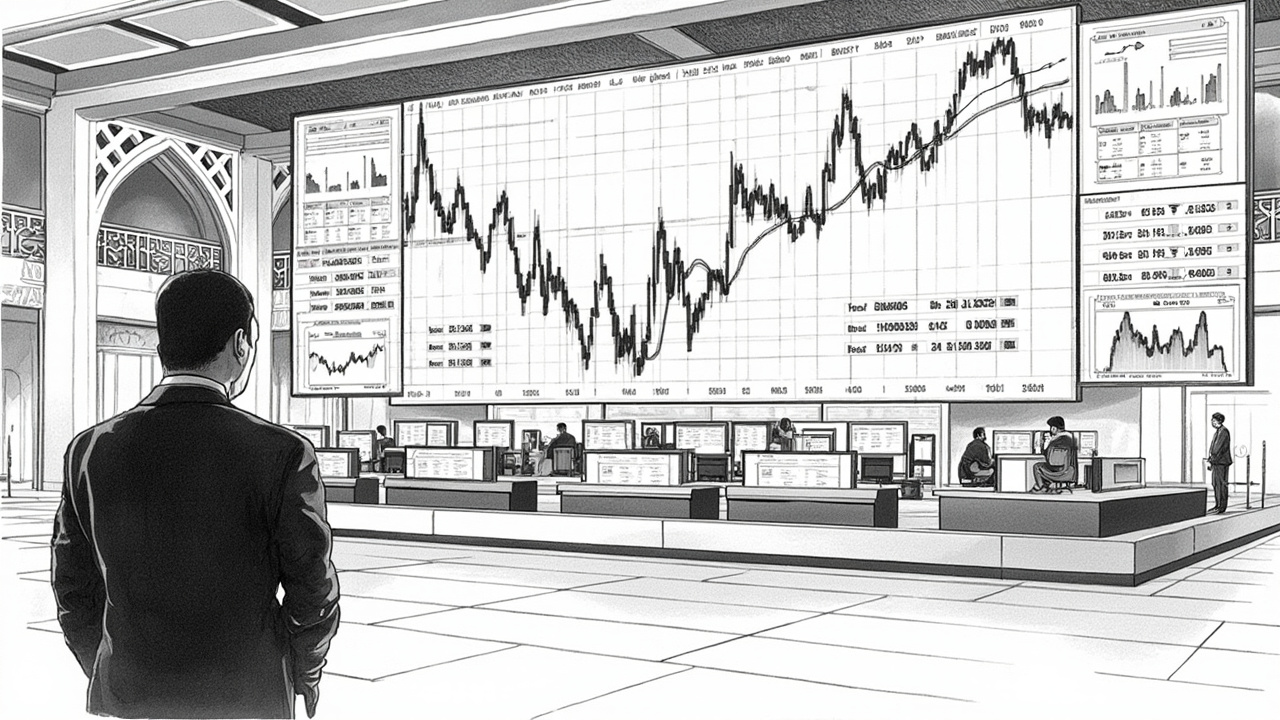
Morocco's new futures market is more about signaling ambition than meeting immediate demand. The Casablanca Stock Exchange (CSE), with approval from the Autorité Marocaine du Marché des Capitaux (AMMC), launched its Marché à Terme (MAT) and a dedicated clearinghouse (Chambre de Compensation, CCP) on April 6. Investors should view this as a long-term regulatory infrastructure project. Its near-term utility is limited by the small underlying equity market.
At 76 listed companies, the CSE's equity base is thin for a vibrant derivatives network. Its equity market capitalization stood at $60.86 billion, with a far smaller debt market of $118.495 million, according to a 2018 CFA Institute analysis. A derivatives market needs liquidity and a diversity of institutional players to hedge. Morocco lacks both. The immediate benefit is for the exchange itself, which can now tick a box on international benchmarking reports.
The world cup infrastructure play
This launch aligns with Morocco's broader, state-driven modernization push tied to co-hosting the 2030 FIFA World Cup. Financial market development is part of the national branding exercise, noted in a World Bank blog on Morocco's growth strategy. Building a central counterparty (CCP) and a derivatives market was framed as a key step in that structural reform. The risk is that political prestige projects can outpace genuine market demand. Capital may be allocated to build shiny infrastructure while underlying issues, like attracting more IPOs or deepening corporate bond issuance, get less attention.
The immediate beneficiaries are large Moroccan banks and asset managers with in-house trading desks. The Société gestionnaire du marché à terme (SGMAT), the entity managing the new platform, becomes a regulatory gatekeeper. Foreign institutions already active in the illiquid cash market get a risk management tool. But for retail investors, this introduces sophisticated instruments into a market dominated by direct stock ownership, creating a potential mis-selling risk.
A question of demand and second-order effects
The real test is whether Moroccan companies will use this to hedge commodity or currency exposure. The initial futures will likely be on the MASI 20 index. Without single-stock or currency futures, the utility for corporate treasury operations is minimal. The second-order effect could be negative for liquidity in the main equity market. If the new derivatives platform siphons off the limited speculative capital from the cash market, bid-ask spreads on the underlying stocks could widen.
The CSE was established in 1929 and has seen multiple reforms, including demutualization in 1993. This latest step continues that gradual evolution. It does not suddenly transform Casablanca into a regional financial hub. Competing with the much deeper markets in Egypt or South Africa requires more than a new trading screen. The launch is a necessary, but insufficient, condition for attracting serious foreign capital. Investors should watch for contract volumes over the next year. We project single-digit daily contract volumes for at least six months, marking this launch as a regulatory box-ticking exercise. Until the equity market deepens, the derivatives market will remain a solution in search of a problem.