Roam's Fast Charge Tests Kenya's EV Infrastructure Gap

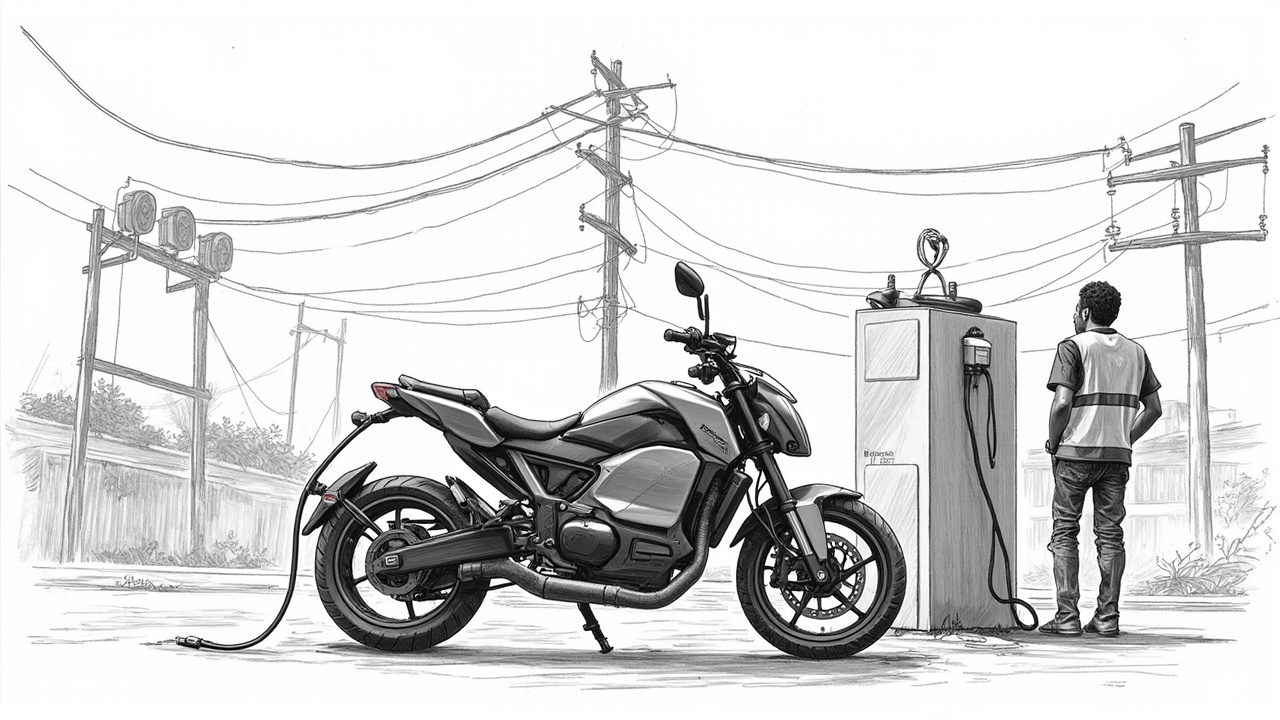
Roam's 40-minute fast-charging battery for the Air Gen 3 electric motorcycle answers one boda boda problem while exposing a deeper one for Kenya's electric mobility push. The Kenyan company's new battery system cuts downtime for commercial drivers, charging from 20% to 80% in under 40 minutes according to The Pack News. The battery adds over 1km per minute and carries a 100,000 km guarantee per The Business Watch. The product targets Africa's commercial two-wheeler market, where boda bodas dominate urban transit. The real test now sits with Kenya's national grid, municipal planning, and distributed charging infrastructure. I see the battery as a technical solution searching for a business environment that does not yet exist at scale.
local manufacturing meets energy policy lag
Roam's previous Gen 2 model achieved 36% local content, surpassing Kenya's own Legal Notice 112 requirements according to CleanTechnica. That is good for the MADEKENYA initiative and local value chains. It signals Roam can build hardware. But manufacturing policy does not equal energy transition policy. Kenya's Ministry of Energy and Petroleum has been slow to clarify EV tariff structures. The Energy and Petroleum Regulatory Authority (EPRA) lacks clear standards for distributed fast-charging stations. The fast-charging promise assumes a network that the private sector must build almost entirely alone. Expect Nairobi's county government to become the real bottleneck on permits for commercial charging hubs.
the boda boda financing trap
The risk is a perfect mismatch between asset financing and revenue models. The 100,000 km guarantee is a strong sales pitch. But it only matters if drivers can access the bike. Boda boda financing remains dominated by high-interest SACCO loans or predatory lease-to-own schemes. Roam and its financing partners must solve for the daily cash flow of a driver, not just the total cost of ownership. A driver's daily deposit to a financier often exceeds what they can earn during charging downtime, even at 40 minutes. The product is technologically sound. The business model is not yet proven.
Kenya's grid, powered heavily by geothermal and hydro, has the generation capacity. The distribution network in informal settlements and boda boda stages does not. Kenya Power's last-mile connectivity project focused on households, not commercial EV hubs. Fast-charging multiple bikes simultaneously at a stage will trip transformers and require costly upgrades. The second-order effect could be a surge in illegal grid connections as drivers seek cheaper, faster power. This is a grid reliability and revenue protection problem Kenya Power is not prepared for.
The quiet beneficiaries are battery swapping startups like ARC Ride and battery component importers in the East African Community. They avoid the grid problem entirely. Roam's direct fast-charging approach is cleaner on paper. It requires more heavy lifting from Kenya's infrastructure. The battery is strong. The GPS tracking is nice. The duration guarantee is market-leading. But until Kenya's counties and energy regulators move faster, this remains a pilot project looking for a country that can support it.