Kenya's 16-Day Petrol Buffer Tests Regional Energy Security

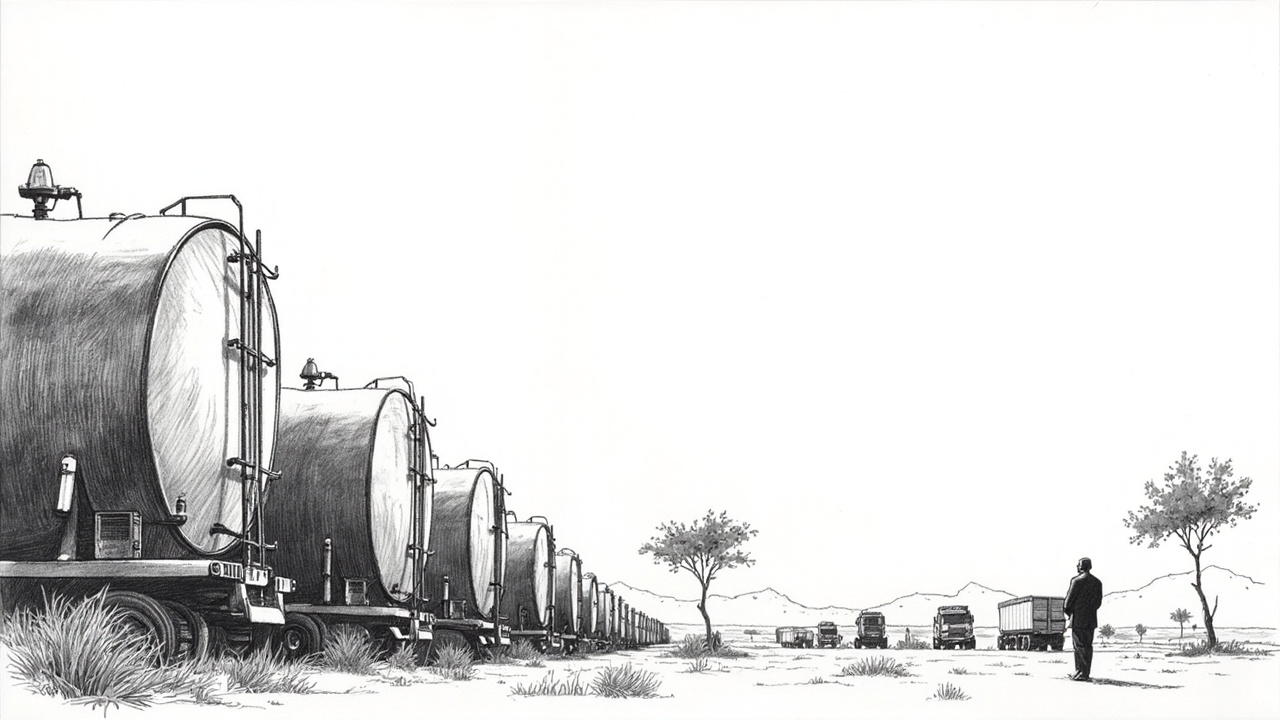
Kenya's 16-day petrol buffer is a stress test for East African integration. Treasury Cabinet Secretary John Mbadi told Parliament the government is monitoring strategic petroleum reserves and shipments after Middle East disruptions according to Reuters. Diesel covers 19 days. Jet fuel has 49. The numbers show a supply chain held together by a short-term metric.
The supply chain choke point
Every drop of Kenya's fuel comes from the Middle East through government-to-government deals. The Strait of Hormuz closure is a direct hit. The Petroleum Outlets Association of Kenya (POAK) already reported retailers running short in March 2026. Kenya's strategic petroleum reserve functions as a national shock absorber. But 16 days is barely enough time for a tanker to reroute around the Cape of Good Hope. The National Treasury is watching, not acting. This is reactive policy, not risk management.
The real failure is regional. The EAC common market protocol covers goods. It does not cover integrated strategic petroleum reserves or coordinated procurement. Tanzania has port capacity at Dar es Salaam and Mtwara. Uganda has a refinery project in Hoima. Kenya has the storage and pipeline network. Yet each country chases its own bilateral deal with Gulf suppliers. AfCFTA's promise of collective bargaining dies at the water's edge. Investors in logistics and transport see the gap. They also see the cost when a single chokepoint disrupts seven economies.
Who loses and who quietly gains
Independent fuel retailers and transporters lose first. Their margins evaporate during shortages. Large, integrated oil marketing companies with storage tanks and import licenses can ride out brief disruptions. They might even gain market share. The downstream sector consolidates during crises. Consumers lose through higher pump prices and inflation. The Central Bank of Kenya then faces a policy bind: fight inflation or support growth?
The second-order effect hits manufacturing and agriculture. Diesel powers factories and farm machinery. A sustained shortage would stall Kenya's industrial expansion under the Big Four Agenda. Export deadlines get missed. Perishable goods spoil. This is not a fuel crisis. It is a competitiveness crisis.
Kenya's response shows the limits of its regional leadership. The country built a pipeline to Uganda and talks of extending to DR Congo. It failed to build a regional risk-sharing mechanism for commodity shocks. That is the investor takeaway. East African integration is strong on paperwork and weak on shock absorbers. Look for logistics firms with diversified routing options. Watch for renewed political pressure on the region's refinery projects. The 16-day SPR metric is a warning. The region's energy security architecture is not fit for purpose.
More bilateral deals, not regional ones, are likely. Higher costs will be passed to consumers, and this crisis may repeat in 18 months.