Ghana's $2.5bn raw export drain tests value addition policies

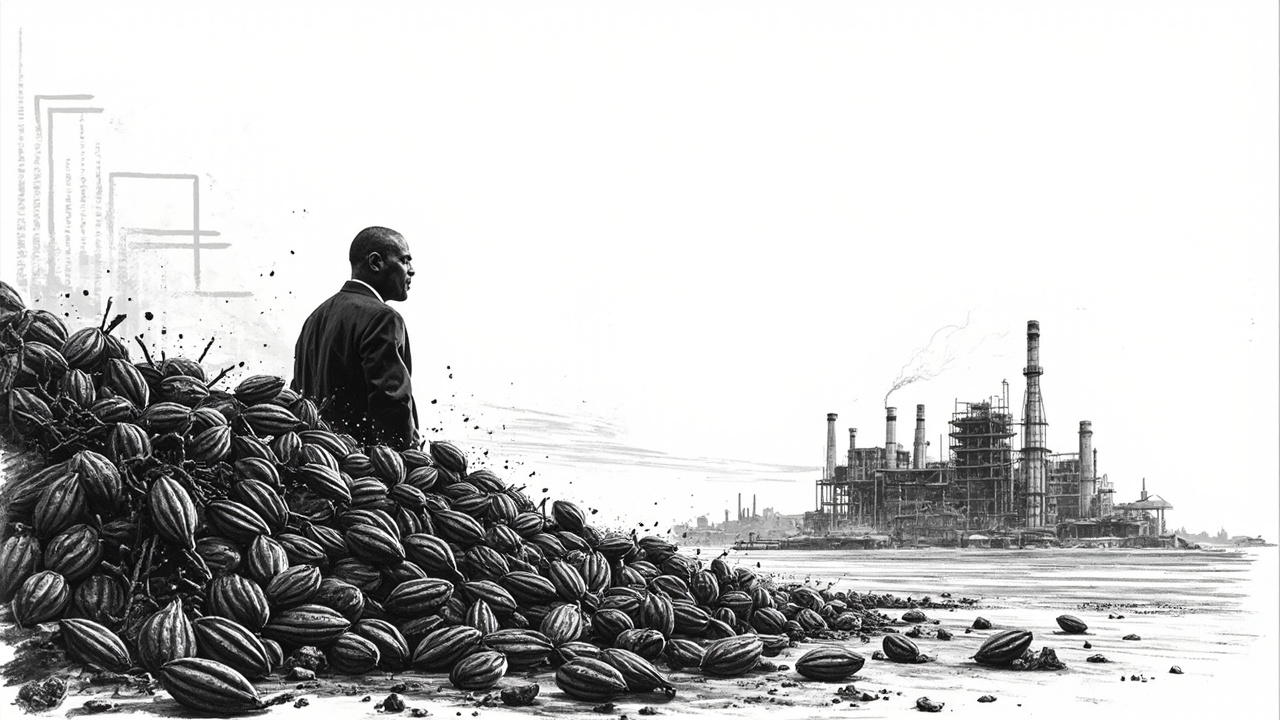
Ghana forfeits an estimated $2.5 billion annually by shipping agricultural commodities in their raw state according to Trade Minister Elizabeth Ofosu-Adjare per NewsGhana. Her ministry handles domestic and international trade, agribusiness and industry according to its website. This warning about lost revenue is familiar. Every few years a Ghanaian minister rediscovers this economic leak. The real question is why the government cannot fix it.
Ghana's trade ministry consistently identifies raw exports as a revenue drain but fails to implement lasting industrial policy. Minister Ofosu-Adjare now leads the Ministry of Trade, Agribusiness and Industry as noted on the ministry site. Her predecessors made similar declarations. The cycle repeats: diagnose the problem, announce ambitious processing zones, then watch as commodity prices or electricity costs undermine execution. Investors should treat this $2.5 billion figure as a symptom of deeper governance failures.
Data quality risks policy credibility
A government statistician recently warned Ghana must overhaul economic measurement or risk governing on wrong data according to NewsGhana. This admission undercuts the minister's $2.5 billion claim. If official statistics are unreliable, how can investors trust the diagnosis or measure progress? The risk is circular: poor data leads to flawed policy, which fails to generate the revenue needed to improve statistical systems. Ghana's revenue authorities struggle with basic tax collection from the formal sector. Adding complex value chains requiring sophisticated monitoring seems optimistic.
Local industry collapse complicates transition
Continued raw exports could collapse local processing according to industry warnings cited by MyJoyOnline. This is not hypothetical. Ghana's tomato processing plants, sawmills, and shea butter cooperatives have decayed for decades. The Association of Natural Rubber Actors of Ghana represents one sector fighting this trend. Yet electricity tariffs, import duties on processing equipment, and competition from subsidized foreign processors create structural disadvantages. Investors betting on Ghana's export processing push must factor these in.
Value addition policies require reliable power, access to credit, and coordinated infrastructure investment. Ghana delivers none consistently. The minister's warning should prompt investors to check which commodities have viable processing margins today, not in some policy future. Cocoa processing shows modest success because it aligns with existing port and logistics infrastructure. Other sectors lack these advantages. The $2.5 billion figure represents theoretical revenue. Investors should expect raw exports to keep bleeding value until Ghana's Ministry of Trade and Industry proves it can coordinate power, data, and policy execution.