Ghana markets brace for petrol price cut as diesel floor rises

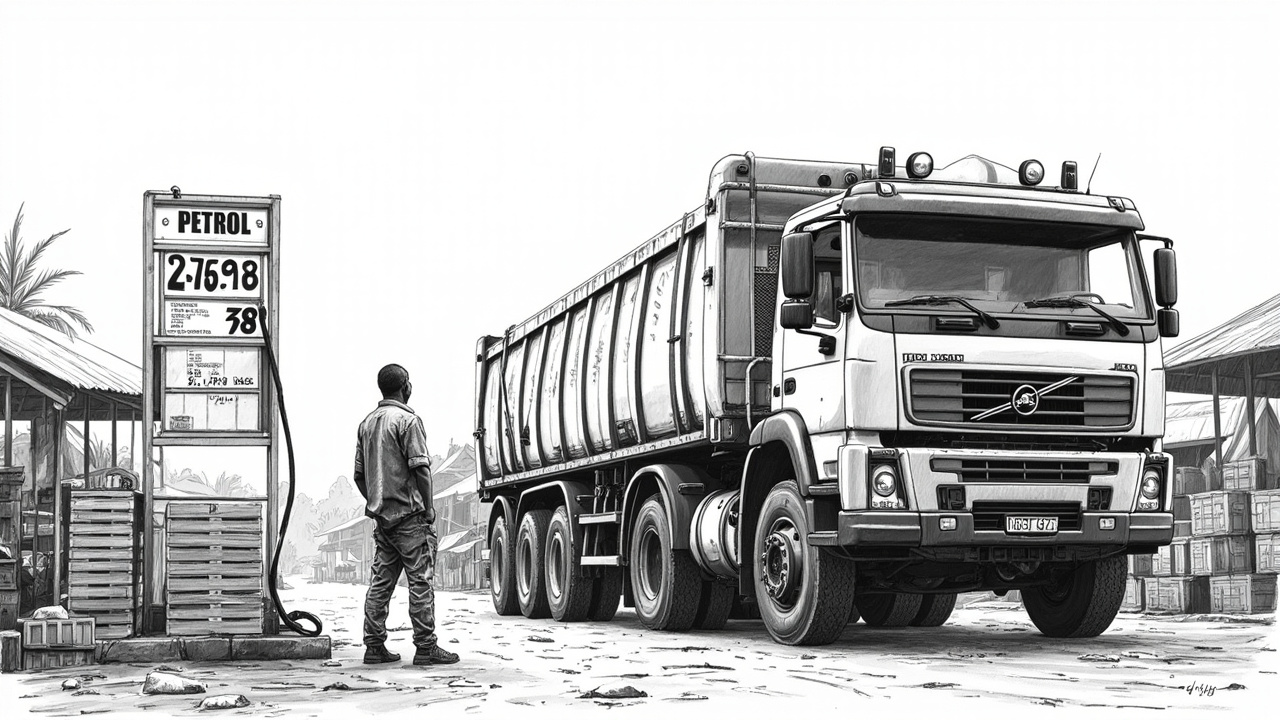
A price floor is a policy confession. From November 1, Ghana's National Petroleum Authority will lower the floor under petrol and lift the one under diesel, and pump prices will move in opposite directions.
For Ghana markets, this is not a neutral technical tweak. It is the regulator conceding that it still sets the boundaries of a market it describes as deregulated.
The floor moves, the market follows
Ghana's pricing regime lets importers and marketers adjust pump prices as world product costs and the cedi move. The floor is the part nobody advertises. Set it too high and consumers overpay. Set it too low and importers stop bringing cargo, and the pumps run dry.
The NPA is now doing both at once: easing petrol, tightening diesel. That split matters more than either headline number. It tells you the regulator is managing two different problems in the same week, and only one of them is really about the consumer.
Petrol gets relief because the political cost of a high petrol price is immediate and loud. Diesel gets a higher floor because diesel is the fuel that keeps haulage, factories, and backup generators running. Almost every input into Ghana's inflation basket touches a diesel tank somewhere along the chain.
The trade-off inside a single adjustment is the story the announcement buries. Relief and cost are being delivered together, and the cost travels further.
Diesel is the tell
Expect the second-order effect to land on transport tariffs before it lands on headline inflation. Tro-tros, long-haul trucks, and cold-chain operators buy diesel weekly. A marginal floor increase is small per litre and large per fleet.
The risk is that the petrol cut gets read as a win while the diesel floor quietly re-prices food and freight. Investors tracking Ghana's disinflation story should watch diesel-linked services, not petrol receipts.
There is a quieter winner. A floor protects margin. Importers holding diesel stock bought before the adjustment see their inventory marked up by policy rather than by market. That is a gift the NPA hands out, and it deserves to be named.
Then there is the border. Ghana sits on a corridor that moves product north to landlocked markets. When the diesel floor rises while the petrol floor falls, the arbitrage incentive across those borders shifts with it. Smuggling is a pricing problem before it is a customs problem, and no enforcement budget fixes a gap that wide.
This is where the pan-African integration pitch gets awkward. AfCFTA commitments and talk of regional harmonisation point one way. National price floors point the other. Every capital still sets its own floor, its own margin, its own political calendar. Traders respond to the gaps between them, not to communiqué language about convergence.
What investors should watch
Three things, and none of them is the November 1 headline.
First, whether marketers pass the petrol cut through in full or absorb part of it. Partial pass-through is the tell on margin stress.
Second, whether diesel demand softens after the floor rises. If it holds, the freight sector has no substitute, and that is a cost story rather than a demand story.
Third, whether the NPA revises again within the quarter. A regulator adjusting floors twice in quick succession is managing prices, not monitoring them.
The blunt verdict: a consumer-friendly headline is wrapped around a cost-push measure. Petrol falls, diesel rises, and the diesel side moves through the economy with more force. Investors who read only the first half will be surprised by the second.