Ghana okada union mandate tests markets and mobility

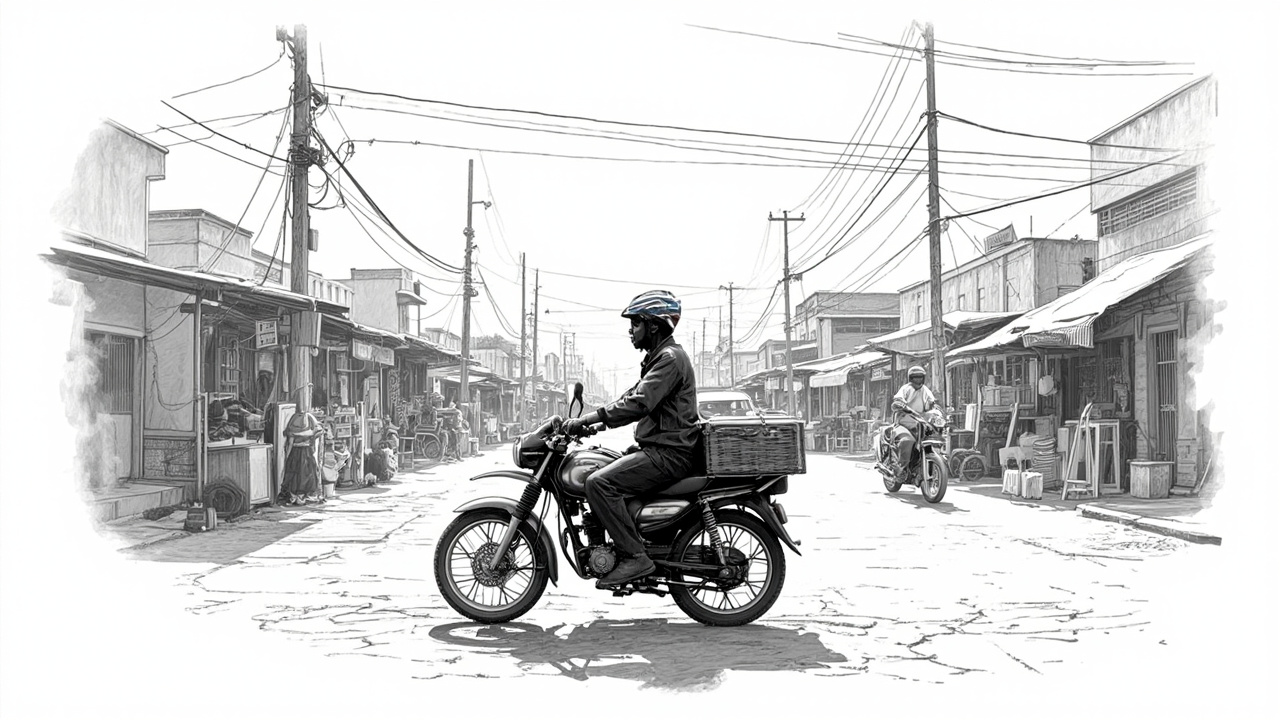
Ghana markets move on okada. The motorbike taxis reach the roads trotros skip, and nobody publishes a timetable for them. Now the National Road Safety Authority wants every commercial rider inside a recognised union or corporate entity. Director-General Abraham Amaliba was blunt about the alternative: no union, no okada.
Call this a safety order if you like. It is also a licensing regime built out of membership cards, and the two things behave differently under pressure.
A gatekeeper is still a gatekeeper
The directive hands entry control to bodies the state did not previously police. Union membership becomes the licence to earn. Whoever issues the card sets the fee, and whoever sets the fee can ration supply.
Formalisation schemes across the region promise order and often deliver rent. The risk here is the same one: a union with pricing influence behaves like a cartel with a welfare office attached. Riders pay dues. Passengers absorb the markup. Neither outcome shows up in a road-safety report.
Amaliba's mandate says nothing in public about who recognises the unions, what registration costs, or how a rider appeals a refusal. Those silences matter more than the announcement.
Cash margins do not stretch to compliance
An okada rider's working capital is the bike, the fuel, and the day's takings. Registration adds a fixed cost to a business with no fixed revenue. Expect some riders to absorb it, some to pass it on, and the weakest to keep riding unregistered.
That last group is the policy's own undoing. A rider outside the register cannot be trained, inspected, or insured. The authority gains a list and loses sight of the people who most need oversight. Road deaths do not check registration status before they happen.
Enforcement is the second gap. A directive is paper until someone stands at a junction. Police and local assemblies already struggle to police loading points, and this rule hands them a bigger surface to cover with no visible new capacity.
Integration rhetoric, municipal reality
Pan-African trade talk keeps promising one rulebook. Ghana's version is a membership card issued by a union that answers to nobody across a border. A rider certified in Accra carries no portable status in Lome or Abidjan.
That is the gap worth naming. AfCFTA harmonisation debates focus on tariffs, rules of origin, and goods. Services and informal labour, the sectors where most Africans actually earn, stay stuck at the municipal level. If a regulator in another member state cannot read a Ghanaian compliance certificate, integration is a speech, not a system.
This suggests a testable prediction. Formalising a fragmented sector through intermediaries works only if the intermediaries are transparent, contestable, and cheap. None of those words appear in the directive as reported.
The authority's next move tells you whether this is regulation or revenue. Watch for a published list of recognised bodies, a fee schedule, and a dispute route for rejected riders. Without all three, expect enforcement to become selective, and selective enforcement in a cash economy turns into a bribe schedule.
Insurers and asset financiers should watch for a different reason. A union-backed register can finally give lenders a counterparty they can price. A register nobody trusts gives them a mailing list.
The directive's real product is not safer roads. It is a map of who counts as a legitimate operator in Ghana's largest informal transport market. Whoever draws that map quietly decides who eats.