Ghana's 5% Growth Revision Masks Revenue Squeeze Risk

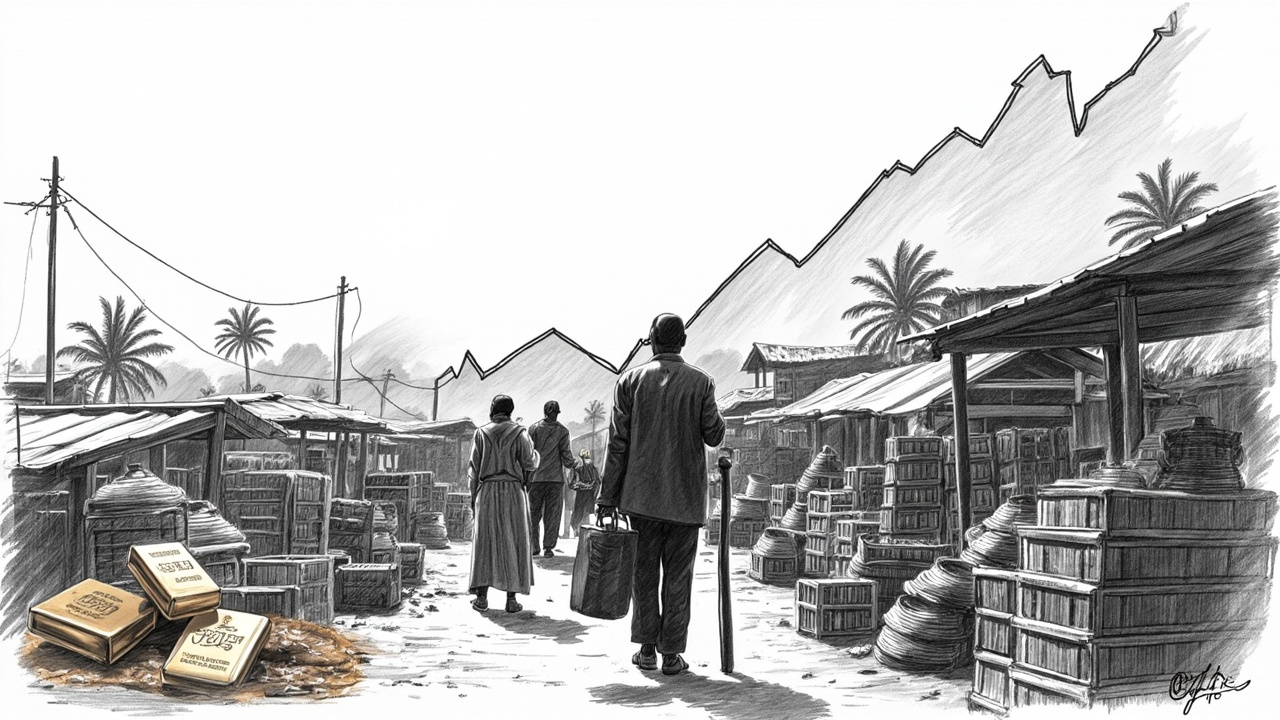
Fitch Solutions revised Ghana's 2026 real GDP forecast to 5.0%, up from 4.9%. The research firm argues high gold prices insulate the country from Middle East oil shocks. This misses how rising costs will squeeze Ghana's tax base where collection is weakest. An 8-11% fuel price hike in early March hits the non-VAT compliant sector hardest. That includes street vendors, drivers, and small shops. Higher transport and food costs shrink disposable income for businesses that already dodge taxes. VAT compliance was weak before this. It will worsen now.
Revenue collection hits where Ghana can't collect
The Ghana Revenue Authority's digitalization push aims to net more taxpayers. But a sharp cost-of-living increase directly counteracts that effort. Informal operators facing higher fuel and utility bills will prioritize survival over tax compliance. The agency's backlog of VAT refunds for formal businesses already strains credibility. Asking a stressed non-VAT compliant sector for more tax is a poor strategy. The risk is a double hit. Real consumption falls, cutting into existing VAT and excise duties. At the same time, the cost of administering and enforcing tax collection rises. For investors, this signals potential revenue shortfalls against the government's budget targets. That could mean renewed borrowing pressure or spending cuts later in 2026.
Gold's cushion is not a revenue windfall
High gold prices support the trade balance and the cedi. They do not automatically translate into higher corporate tax or royalty income for the state. Many major mines operate under stability agreements with fixed fiscal terms. Windfall gains often go to shareholders, not the national coffers. The government's new withholding tax on informal small-scale miners is a more relevant revenue lever. Its success depends on the same non-VAT compliant sector now facing a cost squeeze. The math is simple. If a miner's costs rise faster than the gold price, their taxable income shrinks. Fitch notes the external position is insulated. I question whether the fiscal position is truly safe.
The second-order effect is on monetary policy. The Bank of Ghana faces a dilemma. If it tightens to combat imported inflation, it risks choking the credit needed for growth. If it holds, the cedi weakens and inflation accelerates. A stagflationary scenario, slower growth with high inflation, would devastate tax revenue collection. The GRA's targets look optimistic. Expect pressure on the fiscal deficit if oil prices stay elevated. Investors should watch for deviations in monthly revenue collections starting Q2 2026. The 5% growth headline is a distraction. The real fight is over the pennies in the informal economy.