Ghana markets face new appliance import checks

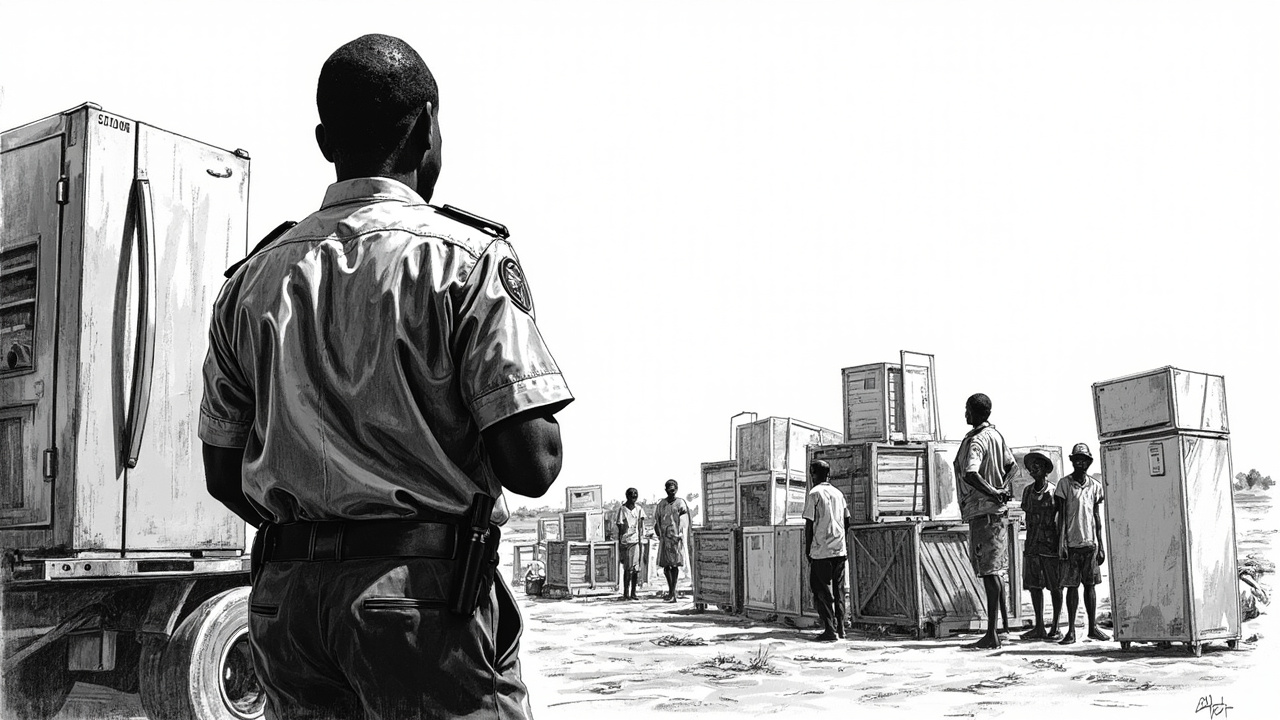
Ghana markets got a quiet regulatory handoff this month. The Energy Commission has asked Customs Division officers of the Ghana Revenue Authority in the Upper East Region to police energy efficiency rules on imported electrical appliances. Read that again. An energy regulator is outsourcing product standards to a tax collector.
Customs collects revenue, not efficiency labels
Customs officers are graded on duty collected. They are not engineers, and border posts in the Upper East Region, including the crossings into Burkina Faso, are not testing laboratories. Expect enforcement to lean on paperwork: does the consignment carry the right label, does the importer hold the right certificate. That catches the formal importer who files documents. It does not catch the container that arrives through an unapproved crossing at night.
That is the second-order problem. Appliance efficiency rules only work when the cost of dodging them exceeds the cost of complying. When enforcement is uneven, dodging wins. The licensed importer pays for testing, labels and clearance delays. The informal trader pays something at the border and moves on. The market tilts toward whoever avoids the rules, and the rules lose credibility with everyone else.
The compliance bill lands on formal traders
Ghana's appliance trade runs through a mix of licensed distributors and informal importers. The Commission's mandate covers electrical appliances entering the country, so the compliance burden sits at the point of entry. There is no sign of matching support: no mention of testing equipment for Customs, no training budget, no funded laboratory capacity in the north.
I have watched this pattern in West African tax administration. A mandate is announced, the press release goes out, and the operational funding never follows. Officers then improvise. Improvisation at a border post usually means discretion, and discretion usually means informal payments. This suggests the policy could raise the effective cost of importing without raising the share of compliant appliances.
The risk for investors in appliance distribution and retail is uneven enforcement, not stricter enforcement. A rule applied everywhere is a cost you can model. A rule applied at some posts and not others is a competitive distortion. Retailers holding compliant stock compete against importers who never saw an inspector.
Where the mandate touches tax capacity
Customs is already stretched. The GRA has spent years pushing into the informal sector because the formal base is too narrow to carry the state's revenue needs. Every new enforcement duty added to a border officer's list competes with the duty he is actually graded on: collections. Product standards and duty collection are different jobs, and they do not reinforce each other.
Then there is geography. The Upper East Region borders Burkina Faso, and ECOWAS free movement rules mean goods cross with deliberately light friction. Ghana can police its own standard at entry. It cannot stop a cheap, inefficient appliance from landing in Burkina Faso, Togo or Senegal and re-entering through the region's informal channels. Without harmonized efficiency standards across the bloc, national enforcement leaks at the edges.
What to watch: whether the Energy Commission funds testing capacity at the border, whether Customs publishes rejection or seizure data, and whether the rules apply at every crossing or only the ones with officers present. If the answer is only the crossings with officers present, treat the announcement as messaging. That version raises compliance costs for the organized trade and leaves the rest of the market untouched.