BoG's 2025 Loss: A Deeper Look at the Central Bank's Record Deficit

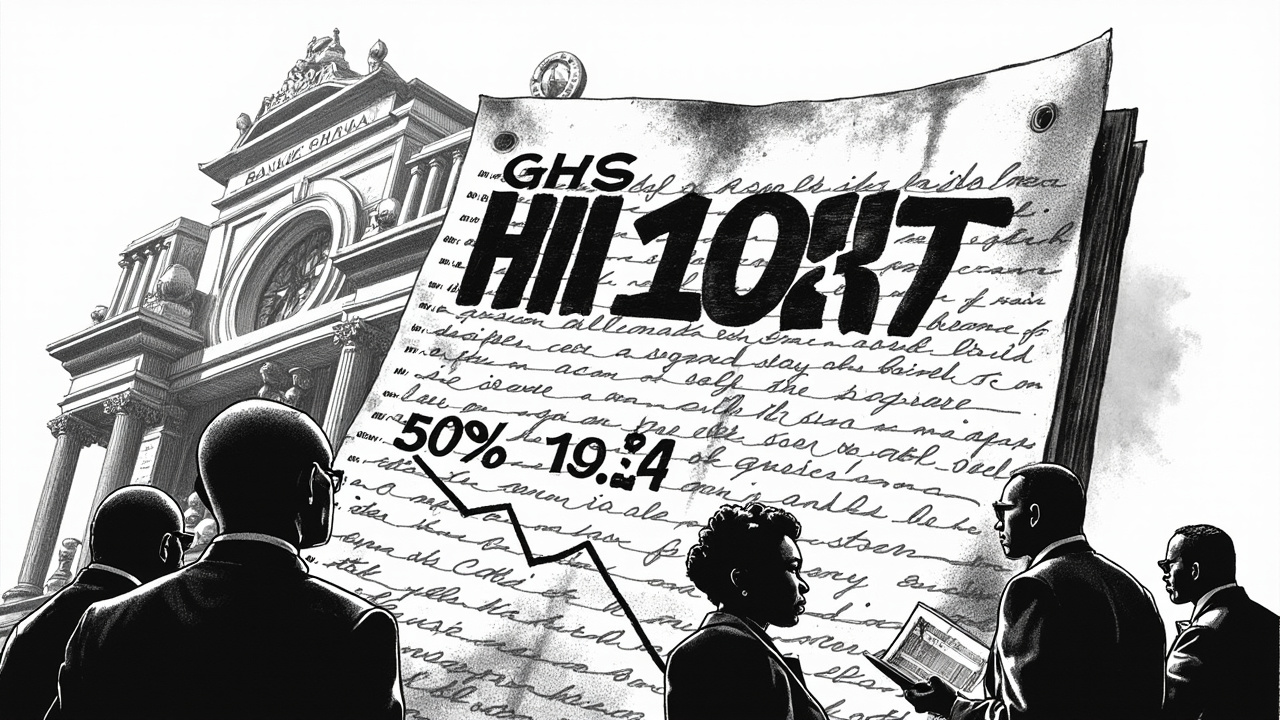
The Bank of Ghana's 2025 operational loss has been described as a ''new low'' in its recent history. In its 2025 Financial Statement published on May 1, 2026, the Bank of Ghana registered a huge operational loss of GHS 15.6 billion, which is the second highest loss by the Bank since the Cedi was redenominated in 2008. For investors in Ghana markets, this figure alone raises serious concerns about the central bank's financial health and its implications for monetary stability.
The initial figure already looked bad—the second-highest loss since the cedi was redenominated in 2008. The magnitude of the deficit signals that the central bank burned through a significant amount of capital. The loss likely stems from unrealised foreign exchange losses or revaluation adjustments that the bank may not have fully disclosed. Whatever the cause, it is a red flag for market participants.
What the loss means for investors
A central bank loss of this size is not an accounting footnote. It signals monetary policy failure. The Bank of Ghana has been running negative equity since at least 2023. Each loss eats into reserves and forces the government to recapitalise, adding to public debt. Inflation expectations harden. Bond yields rise. The cedi absorbs the pain.
Ghana's domestic debt market is already fragile. Foreign portfolio investors fled after the 2022 default. Those still holding local currency bonds now face a double hit: currency depreciation and a central bank that cannot credibly commit to price stability. Expect higher hedging costs and wider bid-ask spreads on GHS trades.
The disclosure of such a large loss also exposes a transparency problem. If the Bank of Ghana can report a deficit of this scale, what else is it not telling markets? The central bank's independence is already questioned. This erodes trust further.
The regional angle: AfCFTA credibility at risk
Ghana positions itself as a gateway for pan-African trade under the AfCFTA. The government touts the new port terminal, the financial hub in Accra, and the push for a single currency roadmap. But a central bank that loses a substantial portion of its capital in one year cannot anchor a stable currency. Neighbouring traders will avoid using the cedi for cross-border settlements. Ghana's voice in regional monetary harmonisation talks weakens.
The BoG loss also undermines the AfCFTA's payment system initiative. The Pan-African Payment and Settlement System (PAPSS) relies on central banks settling in local currencies. If Ghana's central bank cannot manage its own balance sheet, why would the Central Bank of Nigeria or other peers trust it to settle trades? The loss is a concrete obstacle to regional integration, not an abstract one.
The second-order effect
This loss will feed into fiscal arithmetic. The government will likely have to issue more bonds to recapitalise the central bank. That crowds out private sector credit and raises borrowing costs. Small businesses, already squeezed by high interest rates, bear the brunt. Economic growth suffers.
Who benefits quietly? Banks. When the central bank loses money, it often prints more of it. Inflation erodes the real value of bank deposits, but bank profits from float and treasury bills rise. Expect Ghanaian lenders to report stronger net interest margins while everyone else pays the price.
The risk is clear: the Bank of Ghana's credibility is damaged. The cedi stays under pressure. Foreign portfolio investors should factor in higher currency risk and reduced liquidity in Ghana's fixed-income market. This is not a one-off mistake. It's a pattern of central bank mismanagement that the record loss has just exposed.
Punchline: The GHS 15.6 billion loss is not just a number. It is a signal that Ghana's monetary policy framework is broken. Expect the cedi to remain volatile. Expect bond yields to rise. And expect the Bank of Ghana to need a government bailout, which means more debt for a country that already restructured once.