Grand Ethiopian Renaissance Dam: energy output, business impact, and regional implications (2025-2026)

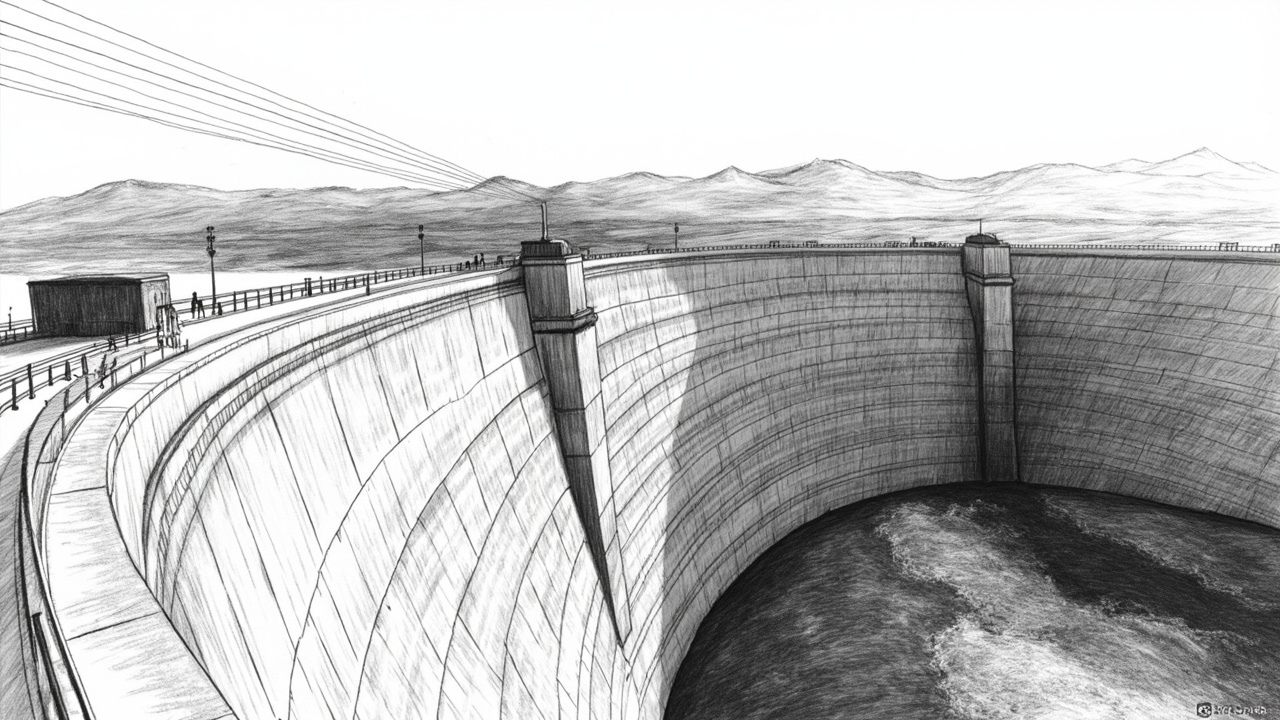
The Grand Ethiopian Renaissance Dam was inaugurated on September 9, 2025, after 14 years of construction and an investment of approximately $5 billion. With an installed capacity of 5,150 megawatts, it is now Africa's largest hydroelectric project, surpassing Egypt's Aswan High Dam, which has held that distinction since 1970. For Ethiopia, where approximately 60 million people, roughly half the population, still lacked electricity access at the time of inauguration, the dam roughly doubles the country's total installed generation capacity in a single step. Ethiopia already exported $118.1 million worth of electricity to Kenya, Djibouti, and Sudan in FY2024/25, and that figure is expected to quadruple as regional grid interconnections reach full capacity. The dam has generated serious diplomatic confrontation with Egypt and Sudan, and that conflict has business implications that are not going away. This guide covers the economics, the infrastructure, the export deals, and the risks.
Key facts at a glance
| Parameter | Value |
|---|---|
| Official inauguration | September 9, 2025 |
| Installed capacity | 5,150 MW |
| Annual output (projected) | 15,700–15,760 GWh |
| Dam height | 170 meters (main RCC dam) |
| Dam crest length | 1,800 meters |
| Reservoir capacity | 74 billion cubic meters |
| Reservoir length | 172 km |
| Number of turbines | 13 (11 × 400MW + 2 × 375MW Francis turbines) |
| Construction cost | approximately $5 billion |
| Builder | Webuild (formerly Salini Impregilo, Italy) |
| Construction period | 2011–2025 (14 years) |
| First electricity produced | February 20, 2022 |
| Ethiopia's pre-GERD installed capacity | approximately 5,000 MW |
| Ethiopia's post-GERD installed capacity | approximately 10,000 MW |
Sources: Webuild press release, September 10, 2025, Wikipedia, Grand Ethiopian Renaissance Dam, Tractebel Engineering
The turbine commissioning sequence tells the real construction story. The first two 375MW turbines came online in February and August 2022. Turbines 3 and 4 (400MW each) followed in August 2024. Turbines 5 and 6 came online in early 2025. All 13 turbines reached operational status on September 9, 2025, the inauguration date.
The dam in numbers: what 5.15 GW actually means
5,150 megawatts is a number that requires some translation. The Hoover Dam on the US-Nevada border, an iconic mid-20th-century engineering achievement, generates about 2,080 MW at full capacity. GERD is roughly 2.5 times larger. The Aswan High Dam, which has defined Egypt's relationship with the Nile since 1970, generates 2,100 MW. GERD produces more than twice that.
Ethiopia's pre-GERD installed generation capacity was approximately 5,000 MW, and actual generation was well below that. The dam adds another 5,150 MW and is expected to produce 15,700 to 15,760 gigawatt-hours of electricity annually when operating at full capacity. To put that in context: the entire country of Ethiopia consumed roughly 10,000 GWh per year before GERD. The dam's output alone could theoretically supply all of current national demand, with surplus for export.
The Tractebel Engineering announcement described the dam as "doubling national power capacity," which is accurate in installed-capacity terms. The practical reality is more complex: distribution infrastructure, transmission losses, and grid management constraints mean that full utilization of GERD's output will take years. But the direction is clear and the magnitude is real.
At the inauguration ceremony, Prime Minister Abiy Ahmed described the project as built "entirely without external loans or foreign aid." That is broadly accurate for the civil construction: 91% of financing came from the Ethiopian government through central bank and domestic bond instruments, with 9% from citizen bonds. The approximately $1 billion needed to finance the Chinese-built turbines came via China Exim Bank, which Abiy's framing elided. The distinction matters to the Egypt-Ethiopia dispute discussion later in this article.
How GERD changes Ethiopia's industrial economy
Ethiopia's electricity sector before GERD was an obstacle to industrialization. Power cuts were frequent, voltage instability damaged equipment, and the cost of backup generation through diesel was a hidden tax on every manufacturer in the country. The industrial parks that the government built at Hawassa, Bole Lemi, Adama, Kombolcha, Mekele, and Dire Dawa were partially undercut by this electricity problem.
Manufacturing and energy-intensive industries
GERD's capacity does not automatically solve the distribution problem, the government's own estimates put the industrial parks' combined electricity demand at approximately 2,500 MW over the next five years for full utilization. At 5,150 MW installed capacity, GERD provides more than enough generation for that demand, assuming the transmission infrastructure is in place to deliver it.
The most concrete near-term impact is on electricity costs for manufacturers. Ethiopia's government has historically provided heavily subsidized electricity to industrial park tenants as an incentive for FDI. With GERD's hydropower generating at low marginal cost, the government has more flexibility to maintain those subsidies while also building surplus for export.
The garment sector example is instructive. Before Ethiopia's AGOA suspension in January 2022, factories in the Hawassa Industrial Development Park employed workers at wages of roughly $26 per month, the lowest garment-sector wages globally, in part because AGOA access made the economics work even with Ethiopia's infrastructural constraints. AGOA's suspension crushed that sector. GERD's electricity makes the structural cost case stronger for eventual reindustrialization, but only if AGOA access is restored or an equivalent trade preference exists. Cheap electricity is a necessary condition for competitive manufacturing, not a sufficient one.
The electricity pricing advantage
Ethiopia's hydropower-dominant electricity mix, 92.3% hydro, 7.1% wind, and less than 1% solar and geothermal in 2025, produces some of the lowest cost-of-generation electricity on the continent. Hydropower, once the dam is built and the debt serviced, generates electricity at near-zero marginal cost. That cost structure is a genuine competitive advantage for energy-intensive industries: aluminum smelting, green hydrogen production, data centers, and electrolytic chemical manufacturing.
In early 2024, Ethiopia became the first country in the world to ban imports of non-electric passenger vehicles, a policy that only makes economic sense if you have cheap, abundant electricity. GERD is the enabling infrastructure for that EV policy. The government has also commissioned feasibility studies for green hydrogen production powered by GERD, a potential export product that would connect Ethiopian hydropower to European industrial decarbonization demand.
Electricity export deals: who is Ethiopia selling power to?
Ethiopia exported $118.1 million in electricity across its three main export routes in FY2024/25, per Capital Ethiopia's March 2026 report. Kenya accounted for the dominant share, with $86.3 million of that total.
Sudan, Djibouti, Kenya: the grid interconnection map
| Export route | Infrastructure | Capacity / terms | Revenue (FY2024/25) |
|---|---|---|---|
| Djibouti | 283 km, 230 kV AC line (operational since 2011) | Ongoing; second interconnector planned | Part of $118.1M total |
| Kenya | 1,067 km, 500 kV HVDC line (commissioned 2022) | PPA for 400 MW; Kenya-Tanzania extension completed Q1 2024 | $86.3 million |
| Sudan | Existing AC interconnections | Ongoing | Part of $118.1M total |
| South Sudan | Under development | N/A | , |
Source: Capital Ethiopia, March 1, 2026
The Kenya route is the largest in both value and strategic potential. The 500 kV High Voltage Direct Current line runs 1,067 km from Ethiopia to Kenya, one of the longest HVDC transmission lines in Africa. A Power Purchase Agreement covers 400 MW of supply. In Q1 2024, the Kenya-Tanzania 400 kV interconnector was completed, effectively extending the Ethiopian power corridor south to Tanzania. The revenue from this corridor is projected to quadruple as Ethiopia brings more GERD capacity online and the regional grid matures.
The Eastern Africa Power Pool (EAPP), with 13 member countries, is the institutional framework for this regional electricity trade. Ethiopia is the anchor supplier. The EAPP's operational launch was targeted for March 2025, and Ethiopia's role as the primary exporter will only grow as GERD reaches its full 5,150 MW output potential.
The Djibouti route is older and lower-capacity, but strategically important given Djibouti's role as a transit hub. A second interconnector to Djibouti is planned, which would increase both the reliability and the volume of electricity exports to the port city's growing industrial and logistics infrastructure.
The Egypt-Ethiopia diplomatic dispute and business risk
GERD was inaugurated without any binding trilateral water agreement with Egypt and Sudan. This is the most politically contentious fact about the dam, and it has direct business implications for companies operating in or considering investment in the region.
The background: Egypt holds rights to 55.5 billion cubic meters of Nile water per year under the 1959 Nile Waters Agreement between Egypt and Sudan. Ethiopia was excluded from that colonial-era agreement. Egypt's actual water needs have grown to approximately 114 billion cubic meters per year as the population has expanded. Ethiopia argues that the 1959 agreement is illegitimate and that GERD's construction and operation are sovereign development decisions.
Negotiations over GERD's filling schedule and drought management rules have failed repeatedly. A 2015 Declaration of Principles signed in Khartoum provided no enforceable drought management rules. Washington talks in 2020 collapsed when Ethiopia rejected draft minimum release requirements. GERD was filled on Ethiopia's own schedule.
In October 2025, shortly after the inauguration, Egypt accused Ethiopia of "reckless, unilateral water releases" after downstream flooding. Egypt and Sudan's leaders reaffirmed a "united stance against unilateral actions." President Sisi warned on October 12, 2025 that Egypt "will not stand idly by" and would take "necessary measures" if the dam is managed irresponsibly, per Fanack Water's reporting.
By late 2025 and into early 2026, Egypt had reportedly supplied arms to Somalia (troops for the African Union support mission, AUSSOM) and provided drones and jets to Sudan's Armed Forces, a pattern that analysts describe as an encirclement attempt. In January 2026, the Trump administration offered a "technical mediation framework." Ethiopia rejected Trump's claim that the dam had been built with US money. In February 2026, reports emerged that Egypt had offered Ethiopia Red Sea port access in exchange for GERD concessions, Cairo denied the offer, and the Horn Review analysis called it "a tactical maneuver amid contradictions and denials."
For business purposes, the relevant question is whether the Egypt-Ethiopia dispute creates operational risk for investments in the region. The honest answer is yes, in specific ways:
Investments in Ethiopia's energy-intensive industrial sector carry the background risk of deteriorating regional stability. The Sudan conflict (separate from GERD but geographically connected) already disrupts the electricity export route to Sudan. Investment in the Kenya power corridor is more insulated from this, Kenya's relationship with Ethiopia is cooperative, not contentious. Projects that depend on Egyptian supply chains or finance, however, are affected by the diplomatic freeze between Addis Ababa and Cairo.
Investment opportunities downstream of GERD
The dam itself is built and government-owned. The investable opportunities are in the infrastructure, industries, and services that GERD's electricity makes viable.
Industrial parks and special economic zones
Ethiopia's industrial parks already exist. What they need is reliable electricity, additional manufacturing tenants, and restored trade preferences. The six parks at Hawassa, Bole Lemi, Adama, Kombolcha, Mekele, and Dire Dawa collectively require approximately 2,500 MW over the next five years for full utilization, per government estimates. GERD provides the generation. The investment opportunity is in the tenant businesses: garment manufacturing, leather goods, agro-processing, and light engineering.
Foreign investors who left Ethiopia after the 2022 AGOA suspension, H&M, PVH Corp, and others, are being courted to return. The AGOA situation remains unresolved for Ethiopia specifically (Ethiopia was suspended in 2022 and the February 2026 reauthorization did not reinstate it), but the government is pursuing bilateral investment agreements with the EU and other trading partners. If Ethiopia's AGOA status is eventually restored and GERD provides consistent electricity, the industrial park model has a genuine value proposition.
Data center and tech infrastructure potential
Cheap, reliable electricity is one of the three prerequisites for competitive data center infrastructure (the others being connectivity and a stable regulatory environment). Ethiopia's GERD electricity positions the country as a potential data center hub for East Africa, at much lower energy costs than South Africa's coal-dependent grid or Kenya's hydro-geothermal mix, which is already at near-capacity.
This is speculative in the near term: Ethiopia's broadband connectivity and regulatory framework for data services are still maturing. But several regional tech companies are evaluating Addis Ababa as a secondary data center location for East African cloud services, and GERD's electricity economics make the energy cost case.
Green hydrogen: a longer-term play
Feasibility studies for green hydrogen production are underway. Green hydrogen, produced by electrolyzing water using renewable electricity, is an exportable clean-energy product with growing demand from European industrial buyers who need to decarbonize steel, ammonia, and other energy-intensive processes. Ethiopia's GERD electricity, at very low marginal cost, is an attractive input for electrolysis. The infrastructure for hydrogen export (ports, pipelines, shipping) does not exist, and the economics of international hydrogen trade are still uncertain. This is a 2030+ opportunity, not a 2026 investment.
International recognition
In January 2026, at a ceremony held at the Kempinski Gold Coast Hotel in Accra, Ghana, the Africa Trade Chamber named GERD the "Industrial Energy Project of the Year 2026," per Capital Ethiopia. The recognition reflects the continent's appreciation of a project built, funded, and completed without the multilateral institutions that normally dominate African infrastructure finance. Whether you view GERD as an engineering triumph or a diplomatic risk depends on where you sit, but there is no question it changes the energy economics of East Africa permanently.
Frequently asked questions about GERD
What is the Grand Ethiopian Renaissance Dam's installed capacity?
GERD has an installed capacity of 5,150 megawatts (5.15 GW), making it Africa's largest hydroelectric dam. It has 13 turbines: eleven 400 MW Francis turbines and two 375 MW Francis turbines housed in two powerhouses. The dam produces a projected 15,700 to 15,760 gigawatt-hours of electricity annually at full operation, per Webuild's September 2025 press release.
When was GERD inaugurated?
GERD was officially inaugurated on September 9, 2025, attended by Ethiopian Prime Minister Abiy Ahmed, Kenyan President William Rutto, and other African heads of state, as well as Pietro Salini, CEO of builder Webuild. The first electricity was produced on February 20, 2022, and all 13 turbines reached operational status at the inauguration. Construction ran from 2011 to 2025, 14 years.
How much did GERD cost to build?
GERD cost approximately $5 billion to build. The financing structure was 91% Ethiopian government (through central bank financing and domestic bonds) and 9% from citizen bonds. The turbine package, costing approximately $1 billion, was financed via China Exim Bank. PM Abiy Ahmed's description of the project as built "without external loans" refers to the civil construction; the turbine financing from China Exim is a more nuanced part of the story.
How does GERD affect Egypt's water supply?
Egypt receives approximately 85 to 90% of its freshwater from the Nile, and GERD's reservoir, 74 billion cubic meters of capacity, is filled by water that would otherwise flow downstream. During filling, downstream flow is reduced. Egypt holds rights to 55.5 billion cubic meters per year under the 1959 Nile Waters Agreement, but actual demand has grown to approximately 114 billion cubic meters. No binding agreement governs GERD's operation during drought periods; negotiations have failed since 2020. Egypt's President Sisi warned in October 2025 of "necessary measures" if the dam is managed irresponsibly, per Reuters' September 2025 coverage.
How much money does Ethiopia earn from electricity exports?
Ethiopia earned $118.1 million in electricity export revenue in FY2024/25, primarily from exports to Kenya ($86.3 million), Djibouti, and Sudan. Revenue is projected to quadruple as the Ethiopia-Kenya-Tanzania power corridor reaches full capacity and additional GERD turbines contribute to the export pool, per Capital Ethiopia's March 2026 reporting.
What percentage of Ethiopia's population has electricity access?
As of 2023, 55.4% of Ethiopia's population had electricity access, according to World Bank data, 94% in urban areas and far lower in rural areas. Approximately 60 million Ethiopians still lacked electricity access at GERD's inauguration. The dam provides the generation capacity to dramatically expand access, but grid extension to rural areas requires a separate, long-term investment program in transmission and distribution infrastructure.