Trump's $1.5tn military bet pressures Egypt markets

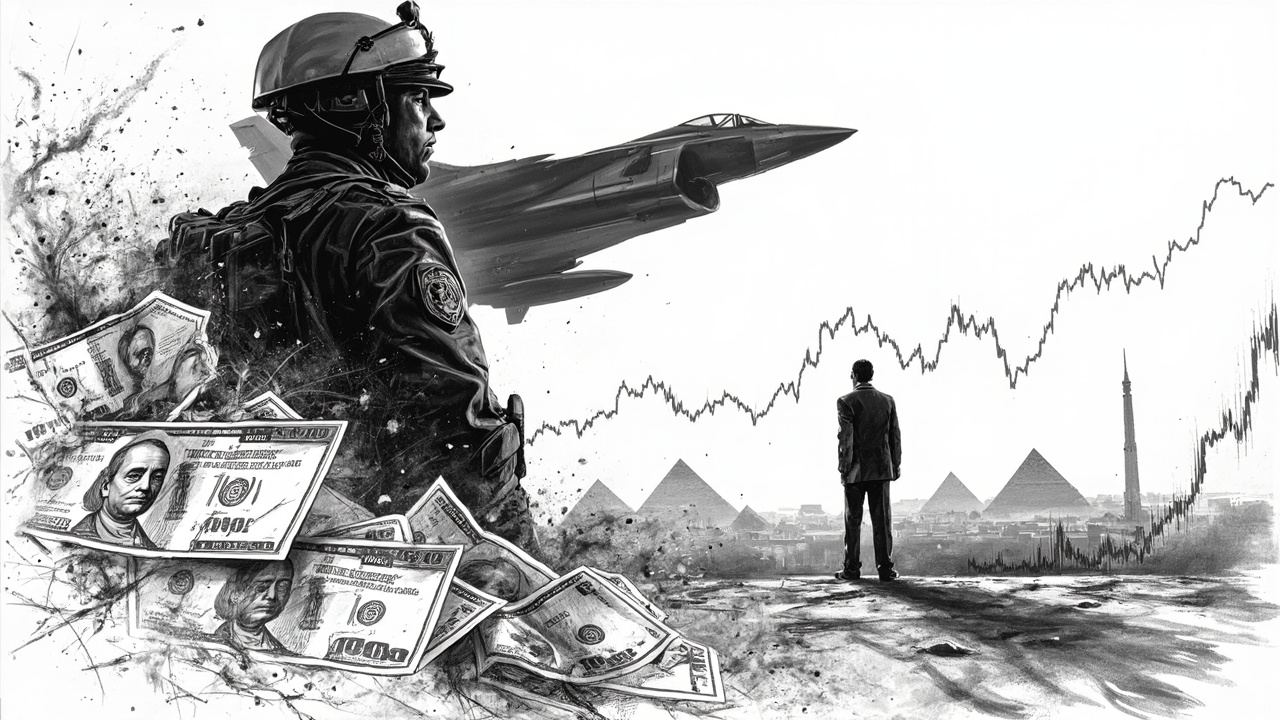
A U.S. defense spending surge could drain critical dollar liquidity from Egypt’s fragile economy. President Donald Trump’s request for a $1.5 trillion military budget in 2027, a 44% increase, redirects massive capital flows according to Reuters. The proposal pairs this with a 10% cut to non-defense discretionary spending. For Cairo, reliant on Washington for $1.3 billion in annual military aid and a key IMF backer, this shift signals acute fiscal risk. The budget is a blueprint, not law. Yet its mere proposal tightens the vise on Egypt’s Central Bank. The real threat isn't reduced aid today, but the market signal it sends to portfolio investors already skeptical of Egypt’s external position.
the immediate dollar drain risk
Egypt’s financial stability hinges on Gulf deposits and multilateral loans to support its currency peg. A U.S. pivot inward, prioritizing domestic arms manufacturing over foreign aid, threatens that scaffolding. The proposed cuts target agencies like the State Department and USAID, traditional channels for economic support. If enacted, they would pressure Egypt's current account deficit just as it seeks further IMF tranches. The second-order effect is on sentiment. Egyptian treasury bill auctions depend on foreign hot money, which fled during past devaluations. Uncertainty over a key patron’s priorities could trigger another exit, forcing the CBE to choose between burning reserves or floating the pound again.a hidden arbitrage in defense tech?
The budget’s drive to eliminate 'woke' policies and boost AI investment opens a narrow door for Egyptian firms. Local startups in cybersecurity, drone tech, and dual-use AI could pitch themselves as cost-effective, apolitical partners for U.S. defense contractors per Al Jazeera. The unit economics are challenging but real. A company like EGIsec or MaxAB’s logistics AI could repurpose tech for supply chain hardening. The quiet beneficiaries are not state-owned giants but agile private firms with U.S.-educated founders who can navigate Pentagon subcontracting rules. This is a regulatory arbitrage play on political ideology, not a broad sector rally.Investors must watch Congressional approval odds. The Democratic-controlled Senate will block most cuts. But the headline risk alone alters Egypt’s cost of capital. Expect wider credit default swap spreads on Egyptian sovereign debt and pressure on the EGX30’s dollar-earning exporters. The smart trade is to short the Egyptian pound’s forward contracts while going long on the handful of tech firms with credible U.S. defense partnerships. Ignore the political noise. Focus on the capital flow: America building more tanks means fewer dollars for Cairo’s budget hole.