Egypt Markets Face Suez Risk as Iran Seals Hormuz

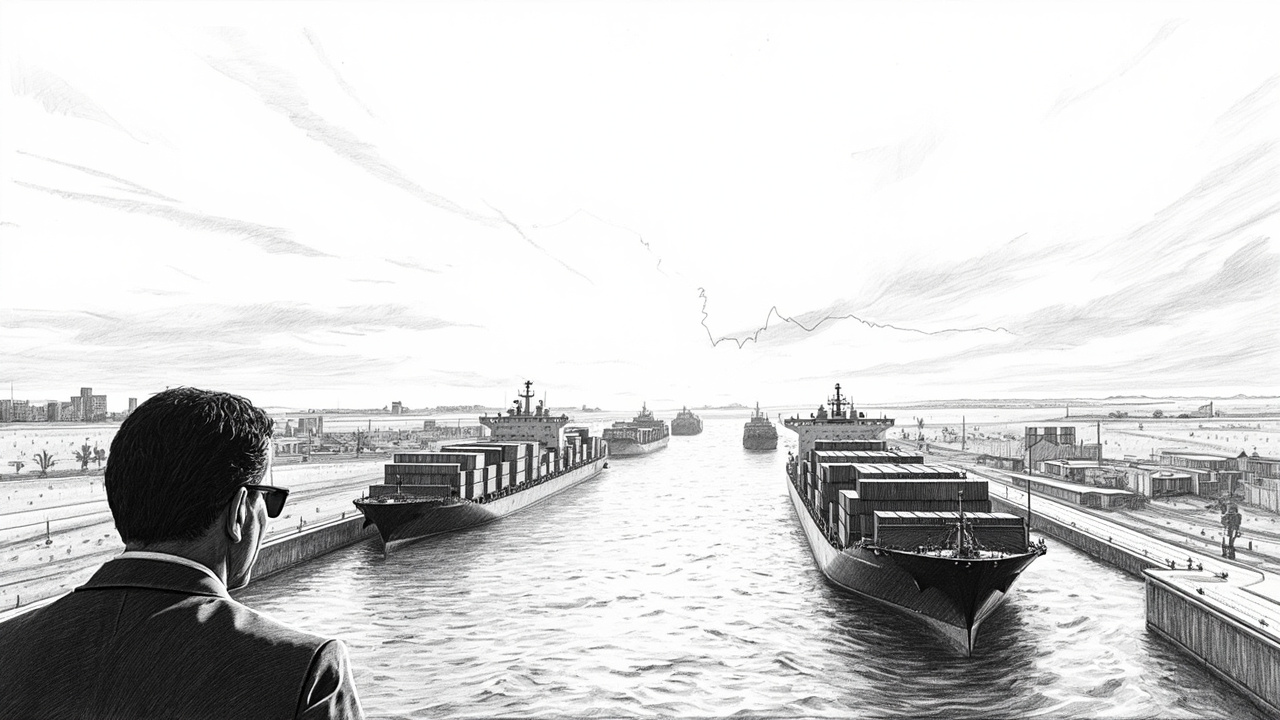
Egypt's fragile economic stability depends on the Suez Canal, but that chokepoint now relies on another one 4,000 km away. Iran’s Revolutionary Guard warned on April 19 that vessels attempting to cross the Strait of Hormuz "would be targeted" according to Daily News Egypt. Traffic through the strait is already "sharply below normal" per Reuters data. For Cairo, the immediate risk is not a naval war but a slow rerouting of trade. The Suez Canal Authority earns hard currency from every tanker skipping the Cape of Good Hope. If Hormuz stays shut, those tankers stop coming. They take the longer Cape route and never enter the Red Sea. Egypt's current account, already under strain, loses a primary source of dollar inflows. I doubt the SCA has a contingency for this.
Energy import bills set to surge
Egypt is a net energy importer. The government's budget assumes a certain range for Brent crude. Any sustained disruption at Hormuz pushes that price north. The Egyptian Natural Gas Holding Company (EGAS) and the Ministry of Petroleum will face higher costs on every tender. They will either absorb the loss, worsening the fiscal deficit, or pass it to consumers and industries. Given the political sensitivity of subsidy cuts, I expect a messy mix of both. The Central Bank of Egypt then contends with imported inflation and a wider trade gap. It is a classic external shock that exposes Egypt's underlying dollar scarcity. Iran’s proposal to charge transit fees as reported by Reuters adds a new layer of operational uncertainty. Shipping lines will factor this potential cost into their Suez transit calculations.
Regulatory response lacks teeth
Here is where skepticism is warranted. The Egyptian government’s public response will likely call for de-escalation and respect for international maritime law. Privately, it has zero use. The Suez Canal Authority cannot force vessels to risk the Hormuz passage. The Egyptian Navy lacks the capacity to escort commercial traffic in the Persian Gulf. This is a problem of political will in Tehran and Washington, not Cairo. Egypt's regulatory bodies are spectators. The real question is enforcement. Can Iran physically block the strait? Probably not completely, but even sporadic attacks or threats achieve the same chilling effect. Investors should watch for a sustained 15-20% drop in Suez Canal monthly transit figures. That is the signal that rerouting is permanent, not temporary. The SCA's revenue projections for 2026 would then require a harsh revision.
The second-order effect is a shift in regional trade corridors. If Red Sea traffic declines, Egypt's planned mega-projects around the Suez Canal Economic Zone lose their rationale. The risk is a double blow: lower immediate revenue and stranded future assets. Who quietly benefits? South African ports and bunkering services along the Cape route see increased activity. In Egypt, only domestic energy producers like those in the Western Desert might gain from higher global prices, but they are a small offset. The blunt verdict is that Egypt’s economy remains dangerously tethered to geography. When that geography is controlled by a rival power 4,000 km away, there is no local fix. Expect pressure on Egyptian Eurobonds and the EGX30 if canal traffic data weakens next quarter.