African countries with the highest mobile money adoption: 2025 country rankings

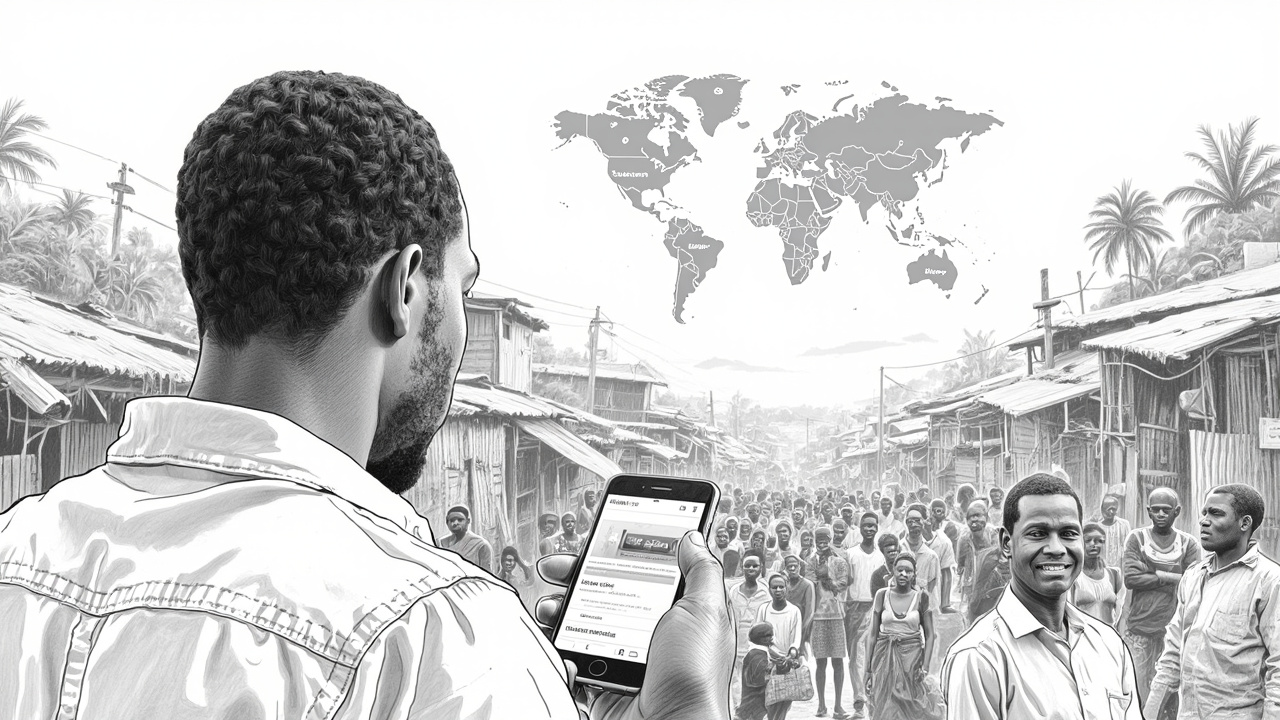
Kenya leads the world in mobile money adoption with 87% of its adult population using the service, followed by Ghana at 78%, according to the World Bank's Global Findex 2025 survey of 2024 data. Six of the ten most mobile-money-active countries globally are in Africa, and sub-Saharan Africa processes over $1.1 trillion in mobile money transactions annually. The continent's lead in mobile payments is structural, not incidental: in markets where traditional bank branch infrastructure was absent, mobile money filled the gap entirely.
This ranking draws on the Global Findex 2025 report (published July 2025, based on surveys of more than 145,000 adults in 141 economies conducted in 2024) and the GSMA State of the Industry Report 2025. The data covers adult population usage rates, not just account registration.
The global picture: why Africa dominates mobile money
The world crossed 2 billion registered mobile money accounts during 2024. Sub-Saharan Africa accounts for roughly 1.1 billion of those accounts, just over half the global total, while representing about 14% of global population, according to GSMA data published in April 2025. Monthly active users globally reached 514 million, up 11% year-on-year.
It took the industry 18 years, from 2001 to 2019, to reach one billion registered accounts. The doubling to two billion took just five more years.
Sub-Saharan Africa's 283 million monthly active users in 2024 generated transaction volumes of more than 81 billion annually, worth approximately $1.1 trillion. Volume growth in the region ran at 22% year-on-year. The share of mobile money providers in sub-Saharan Africa operating profitably rose from 76% to 83% between 2023 and 2024.
The business logic is simple: mobile money costs far less to deploy than a bank branch. An agent network of handset-carrying individuals replaces infrastructure that would otherwise cost tens of millions of dollars per province. And the fee economics work at very low income levels, transactions of a few dollars are viable because the marginal cost per transaction is close to zero once the network is built.
Top 10 African countries by mobile money adoption (2025)
The table below draws on the World Bank Global Findex 2025 and the GSMA State of the Industry 2025. The percentage represents adults using mobile money in 2024.
| Rank | Country | % adults using mobile money | Key operator | Notes |
|---|---|---|---|---|
| 1 | Kenya | 87% | M-Pesa (Safaricom) | #1 globally; near-universal in urban areas |
| 2 | Ghana | 78% | MTN MoMo, Telecel, AirtelTigo | Interoperability since 2018 drove surge |
| 3 | Zambia | 69% | Airtel Money, MTN MoMo | Among top 5 globally |
| 4 | Uganda | 68% | MTN MoMo, Airtel Money | Top 5 globally |
| 5 | Senegal | 67% | Orange Money, Wave | Wave's 1% flat fee disrupted incumbents |
| 6 | Tanzania | ~62% | M-Pesa, Airtel Money, Tigo Pesa | Strong multi-operator market |
| 7 | Rwanda | ~58% | MTN MoMo | Government-backed adoption push |
| 8 | Côte d'Ivoire | ~55% | Orange Money, Wave | ECOWAS free zone boosts cross-border use |
| 9 | Zimbabwe | ~50% | Ecocash | Adoption driven by hyperinflation era |
| 10 | South Africa | 32% | FNB eWallet, MTN MoMo | Ranked 41st globally; <a href="/banking">banking sector</a> explains lag |
Sources: World Bank Global Findex 2025; GSMA State of the Industry Report 2025
Note: Afrobarometer's 2025 survey, which measures self-reported usage broadly, shows slightly higher figures, Kenya at 92%, Ghana at 88%. The Findex numbers above use the stricter World Bank methodology applied consistently across all 141 survey economies.
Kenya: 87% adoption and how it got there
Kenya's position at the top of this ranking is not accidental. M-Pesa launched on Safaricom's network in March 2007, a few years before smartphones were common, and scaled through a network of corner-shop agents rather than bank branches. By the time mobile banking matured globally, Kenya already had a functioning mass-market payments system that banks could not easily displace.
The numbers today are substantial. M-Pesa had 35.82 million monthly active users in Kenya in the financial year ending March 2025, up 10.5% year-on-year, according to Safaricom's FY2025 results. Transaction volume in Kenya reached 37.15 billion for the year, up 29.5%. The total value of those transactions was KES 38.29 trillion (approximately $297 billion at current exchange rates).
M-Pesa accounted for 41.5% of Safaricom's total group revenue in FY2025, KES 161.1 billion ($1.25 billion), up from 40.1% the year before. This is a company where mobile money now generates more revenue than voice calls, data, and everything else combined. Revenue grew 15.1% year-on-year.
The agent network is enormous: 298,900 registered M-Pesa agents in Kenya alone as of March 2025, up 14.1%. There are 675,870 Lipa Na M-Pesa merchants, small businesses accepting payment through the service. Credit products built on M-Pesa rails (Fuliza overdraft, M-Shwari, KCB M-PESA, Timiza) disbursed KES 1.16 trillion in affordable credit during the same period.
Kenya's account ownership rate per the Global Findex 2025 is 90.1%, up from 79.1% in 2021. The World Bank survey suggests near-universal financial access in a country that had almost none twenty years ago. The mechanism was mobile money, full stop.
Ghana: 78% and the interoperability advantage
Ghana's mobile money story is different from Kenya's, and arguably more instructive for policymakers elsewhere. The country's account ownership rate jumped from 41% in 2014 to 81.2% in 2024, one of the fastest increases recorded globally, driven entirely by mobile money rather than traditional banking expansion.
The specific policy intervention that drove Ghana's surge was the Mobile Money Interoperability (MMI) framework, mandated by the Bank of Ghana in May 2018. Before interoperability, a subscriber on MTN's MoMo network could not send money to someone on Telecel Cash or AirtelTigo Money without going through a bank. After the mandate, any wallet could transfer to any other wallet instantly. That single change removed the network lock-in problem that had fragmented adoption.
By November 2024, Ghana had 71.9 million registered mobile money accounts, in a country of roughly 33 million adults. The gap between registered and active accounts is large (23.3 million active), but the reach of the infrastructure is total. The registered agent network stood at 872,000 in the same month, and monthly transaction value hit GH₵298.6 billion.
Ghana introduced a mobile money transaction levy (the "e-levy") in 2022, set at 1.5% on transfers above a threshold. Transaction volumes fell sharply after the levy launched. The levy was reduced the following year, and volumes recovered, a real-world test of price elasticity in mobile money markets that has since been studied by central banks across the continent.
Zambia, Uganda, and Senegal: the middle tier
Zambia's 69% adoption rate reflects a market where mobile money is the dominant financial access channel for the rural majority. Airtel Money and MTN MoMo are the two main operators; competition between them has kept fees lower than in many peer markets. Zambia's financial inclusion rate in the 2021 Findex was roughly 45%, the jump to 69% mobile money usage in three years is among the sharpest in the dataset.
Uganda at 68% presents a different dynamic: the country has one of the most competitive mobile money markets in Africa, with MTN MoMo and Airtel Money splitting the market. Mobile money tax policy has been contested, Uganda introduced a 0.5% fee on mobile money withdrawals in 2018 (later revised to a 1.4% tax on some transactions), but adoption has continued upward regardless.
Senegal at 67% is shaped heavily by Wave, the Dakar-based mobile money startup that became a unicorn in September 2021 after raising $200 million at a $1.7 billion valuation. Wave's business model undercuts every traditional mobile money operator: it charges a flat 1% to send money, and deposits and withdrawals are free. Orange Money and other incumbents charge 2–5% depending on transaction size. Wave is now the largest mobile money operator in Senegal by transaction volume, and it has expanded into Côte d'Ivoire with the same pricing model, according to TechCrunch's coverage of Wave's Series A.
The laggards: why some large markets lag
Nigeria: large ecosystem, lower penetration
Nigeria's mobile money adoption rate per the Global Findex 2025 is 63.3% for account ownership overall, but mobile money specifically lags behind the East and West African leaders. The reason is a policy peculiarity: for most of the 2010s, the Central Bank of Nigeria restricted non-bank entities from operating mobile money services, reserving the space for banks. By the time telco-led mobile money was permitted, the market had already fragmented across bank apps, fintech wallets, and USSD banking.
OPay, with 50 million registered users, is the closest Nigeria has to a dominant mobile money operator, but it operates as a licensed financial services company rather than a telco-led service. MTN Nigeria launched MoMo in 2022 and has been building its agent network since, but it entered a market that was already crowded in ways that Kenya's was not in 2007.
Nigeria's 49 million unbanked adults, in a country of approximately 133 million adults, remain the largest absolute unbanked population in Africa. The Central Bank's Bank Verification Number (BVN) system had 67.8 million registrations as of December 2025, with 311 million active bank accounts across the system (many individuals hold multiple accounts). The enforcement of BVN and National Identification Number (NIN) requirements in April 2024, which froze accounts lacking these credentials, was both a push for financial identification and a disruption for lower-income account holders.
South Africa: the banking sector effect
South Africa at 32% mobile money adoption is the clearest case of the banking sector effect. The country has one of the most sophisticated financial systems in the emerging world: four major commercial banks (Standard Bank, FirstRand/FNB, Absa, Nedbank) serve the majority of the adult population, and most transactions happen through bank accounts, debit cards, and digital banking apps rather than mobile money wallets. Mobile money fills the gaps at the low-income end, but it does not dominate the way it does in markets where banks were never present.
South Africa ranks 41st globally for mobile money adoption. That ranking is not a failure, it reflects the alternative financial infrastructure that preceded mobile money. But for operators and investors, it means the South African market requires a different product-market fit than Zambia or Uganda.
What drives mobile money adoption: key country factors
The cross-country data reveals a consistent pattern. High mobile money adoption correlates with four conditions:
First, low pre-existing bank branch density. In Kenya, Ghana, Uganda, and Zambia, the bank branch-to-population ratio was among the lowest on the continent before mobile money launched. There was no incumbent infrastructure to displace.
Second, early and decisive telco-led entry. M-Pesa's advantage in Kenya is partly about timing, Safaricom launched before any competitor could match its agent network. Ghana's MTN MoMo built similarly durable distribution infrastructure through the 2010s.
Third, interoperability mandates. Ghana's 2018 MMI framework is the clearest example. Tanzania mandated interoperability in 2014 and saw similarly strong adoption. Markets without interoperability, where operators have incentives to keep wallets closed, consistently show lower adoption rates.
Fourth, low cost of the service relative to the alternative. Wave's market-share gains in Senegal and Côte d'Ivoire against Orange Money are explained almost entirely by its lower fees. When the price differential is wide enough, users switch. The average cost of a cross-border mobile money remittance across Africa is 3.54%, already the cheapest cross-border transfer channel available globally, yet only 4% of global remittances use mobile money, according to GSMA research on mobile money's economic impact.
Operator data: M-Pesa, MTN MoMo, Airtel Money, Orange Money
The four largest mobile money operators in Africa control the bulk of the market. Their 2024 numbers give a sense of scale.
| Operator | Monthly active users | Annual transaction value | Key markets |
|---|---|---|---|
| MTN MoMo | 63.1 million | $321 billion | 16 African countries |
| M-Pesa (Safaricom) | 35.82 million (Kenya only) | $297 billion (Kenya only) | Kenya, Ethiopia, Mozambique, Tanzania, DRC, Lesotho, Ghana |
| Airtel Money | 50 million+ registered | ~$193 billion (annualized, mid-2025) | 14 African countries |
| Orange Money | ~49 million active | €160 billion+ | Francophone West and Central Africa |
Sources: Safaricom FY2025 annual results; MTN Group 2024 annual results; Airtel Africa mid-2025 operational update
MTN's fintech revenue grew 28.5% year-on-year in 2024, processing 20.3 billion transactions. Airtel Money's annualized transaction value grew 36% year-on-year to approximately $193 billion. The growth rates across all four operators are well above global fintech averages, this is still an expansion phase, not a mature market.
Safaricom's Ethiopia M-Pesa operation, launched in 2022 alongside the Ethiopian telecoms market liberalization, had 3.4 million active users as of the half-year to September 2025. Revenue from Ethiopia remains negligible relative to Kenya's contribution, but the market is growing from a very low base.
The GDP impact: what mobile money does to an economy
Countries with mobile money services had GDP approximately $600 billion higher by end-2022 than they would have without it, according to GSMA research on mobile money's economic impact in five African markets published March 2025. That is equivalent to roughly a 1.5% GDP uplift across all markets where mobile money operates.
The country-level effects are substantial. By end-2023, Kenya, Ghana, Côte d'Ivoire, Senegal, and Tanzania each had economies estimated 8–10% larger than they would have been without mobile money, the counterfactual being alternative payment infrastructure or continued cash dependency. The per capita income contribution ranges from $240 (Tanzania) to $530 (Ghana) in 2017 purchasing power parity terms.
The mechanism is straightforward: mobile money reduces transaction costs, which encourages more trade. It enables savings and credit for people previously excluded from both. It allows wages to be paid digitally, reducing the cash handling costs for employers and the physical risk for workers. It provides a payment rail for government-to-person transfers, which in many countries had previously required physical presence at a government office.
The savings effect per the Global Findex 2025 is striking. Formal savings in sub-Saharan Africa rose from 23% of adults in 2021 to 35% in 2024, a 12 percentage point increase in three years. Mobile money accounts are the primary vehicle: 20% of sub-Saharan African adults now rely solely on mobile money for their financial life, with no traditional bank account at all.
Cross-border mobile money: PAPSS and the remittance opportunity
The Pan-African Payment and Settlement System (PAPSS), launched January 13, 2022, is the infrastructure designed to make cross-border mobile money payments as simple as domestic ones. PAPSS operates across 16 countries with 15 financial institutions, enabling transfers in local African currencies without routing through US dollar or euro correspondent banks.
Adoption has been slower than hoped. Merchant integration and bank onboarding have taken longer than the system's architects projected. But the market opportunity is clear: Africa receives approximately $100 billion in annual remittances, and the average cost of sending money to sub-Saharan Africa via traditional channels is still above 7%. Mobile money remittances cost 3.54% on average. The gap is enormous, and only 4% of global remittances currently use mobile money rails.
For investors and fintech operators, the cross-border segment is the most underdeveloped part of the mobile money stack. Domestic person-to-person transfers are a solved problem in most of the top-ten markets on this list. The next ten years of growth will be driven by merchant payments, cross-border corridors, and credit products built on mobile money data.
Investment implications: where to deploy capital
The ranking above implies different investment theses depending on where you are in the mobile money stack.
Markets with high adoption and strong operator infrastructure, Kenya, Ghana, Tanzania, are not where you build another mobile money wallet. M-Pesa and MTN MoMo have those markets. The opportunity is in the services built on top: insurance, working capital credit for small merchants, invoice financing for SMEs, savings products for informal workers. Moniepoint in Nigeria, valued at $1 billion in October 2024 after raising $110 million from investors including Google's Africa Investment Fund and British International Investment, illustrates the model: use mobile money infrastructure as the payment layer and build a full business banking suite on it.
Markets with moderate adoption and rising penetration, Zambia, Rwanda, Côte d'Ivoire, present the classic mobile money operator opportunity. Network effects are not yet locked in everywhere; agent network build-out still matters; fee competition can shift market share.
Markets with low adoption but large populations, Nigeria, Ethiopia, are where platform-level bets remain viable. Nigeria's 49 million unbanked adults constitute the largest remaining prize on the continent for any operator that can crack the distribution problem.
Frequently asked questions about mobile money in Africa
Which country has the highest mobile money adoption in Africa?
Kenya ranks first globally for mobile money adoption, with 87% of adults using mobile money as of 2024, according to the World Bank Global Findex 2025. That compares to a sub-Saharan Africa average of 40% and a global average of 15%.
How much money moves through African mobile money systems each year?
Sub-Saharan Africa processed approximately $1.1 trillion in mobile money transactions in 2024, in more than 81 billion individual transactions, according to the GSMA State of the Industry Report 2025. That represents roughly 65% of the global total of $1.68 trillion in mobile money transaction value.
Why does South Africa have lower mobile money adoption than Kenya or Ghana?
South Africa has a developed traditional banking sector, four major commercial banks serve the majority of the adult population. Mobile money fills gaps at the lower end of the income distribution, but it does not dominate the way it does in markets where bank branches were never present. South Africa ranks 41st globally for mobile money adoption at 32% of adults, per the Global Findex 2025.
How many M-Pesa users are there in Kenya?
Safaricom reported 35.82 million monthly active M-Pesa users in Kenya for the financial year ending March 2025, a 10.5% increase from the previous year. The Safaricom Group total, including Ethiopia, Mozambique, and other markets, reached 62.3 million active customers by September 2025.
What is PAPSS and how does it affect cross-border mobile money?
PAPSS (Pan-African Payment and Settlement System) launched in January 2022 and allows mobile money transfers between participating African countries in local currencies, bypassing the need for US dollar or euro correspondent banking. As of early 2026, it covers 16 countries and 15 financial institutions. Adoption by merchants and banks has been gradual, but it represents the primary infrastructure for scaling cross-border mobile money payments across Africa.
Is mobile money the same as mobile banking?
No. Mobile money services (like M-Pesa or MTN MoMo) operate through mobile wallets that do not require a traditional bank account, users deposit and withdraw cash through agents, and transfer value through a SIM-linked wallet. Mobile banking refers to accessing an existing bank account through a smartphone app. In Africa, mobile money preceded widespread smartphone ownership and operates largely via USSD on basic handsets, which is why adoption rates are high even in low-income populations.