Eskom Wage Standoff Exposes South Africa Energy Transition Risks

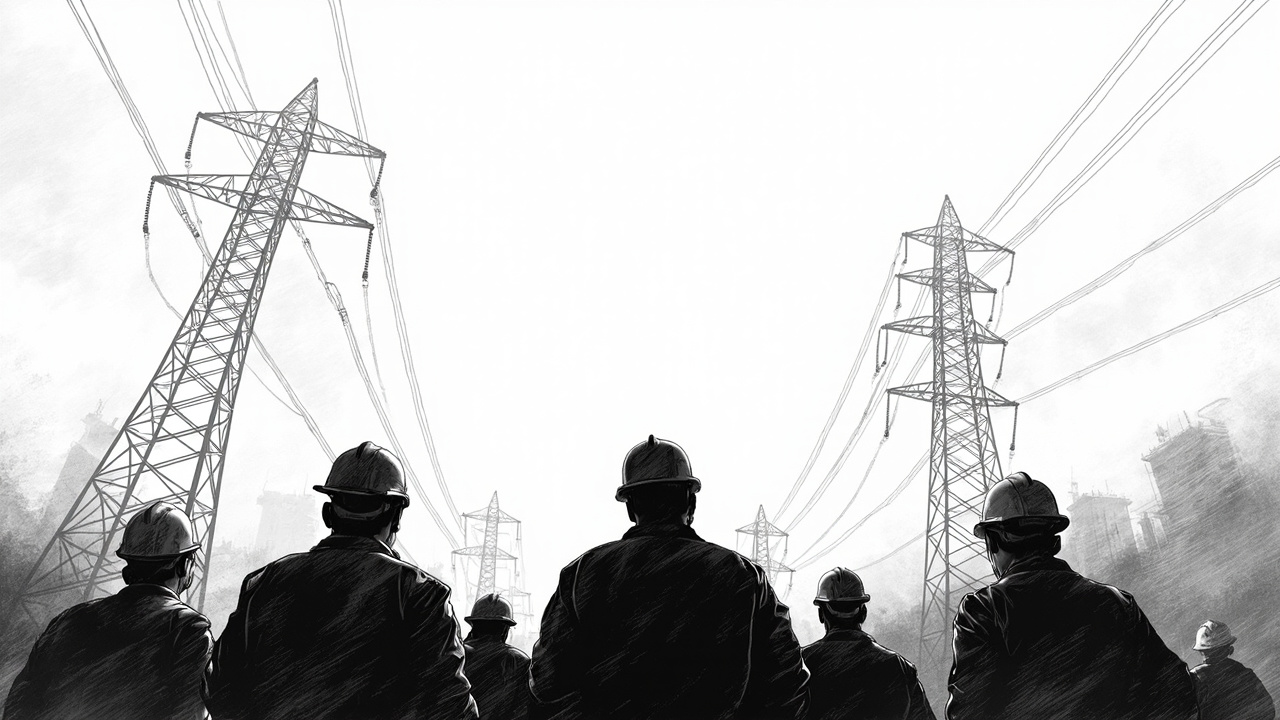
Labor Unrest Threatens South Africa's Power Stability
Eskom's wage negotiations reveal deeper structural risks to South Africa's energy transition that investors are underpricing. The National Union of Mineworkers and NUMSA rejected the utility's 6% salary offer, according to Reuters, despite the increase exceeding South Africa's inflation rate. The unions cite workers' role in ending load-shedding as justification for higher demands.
This timing is critical. Eskom finally achieved consistent power generation after years of rolling blackouts that severely damaged economic activity across multiple sectors. The utility's improved coal plant performance has brought welcome stability to electricity supply. Now labor disputes threaten to derail this fragile recovery just as South Africa seeks to attract renewable energy investment and rebuild business confidence.
Union Strategy Reveals Deeper Governance Problems
The rejection exposes Eskom's fundamental governance contradiction: the utility cannot afford wage increases that match worker productivity gains, yet it depends entirely on those same workers to maintain aging infrastructure. Both unions demand higher increases, arguing their members deserve credit for the recent operational turnaround.
This creates a dangerous precedent for South Africa's broader state-owned enterprise sector. If Eskom workers successfully extract above-inflation increases after improving performance, similar demands will cascade to Transnet, SAA, and other parastatals. The government's fiscal consolidation efforts depend heavily on containing wage growth across state-owned enterprises.
The wage talks began last year with a 5.5% offer that was raised to 6% during the third negotiation round. This incremental approach signals Eskom's weak bargaining position and limited fiscal room for maneuver. The utility faces mounting pressure to balance worker demands against its precarious financial position.
Regional Integration Implications Underestimated
Investors are missing the cross-border implications of Eskom's labor instability. South Africa anchors the Southern African Power Pool, supplying electricity to neighboring countries including Botswana, Namibia, and Mozambique through long-term contracts. Any disruption to Eskom's operations would cascade across regional grids, undermining broader economic integration efforts across the continent.
The wage standoff also threatens South Africa's position as a potential renewable energy hub for the region. International climate finance and development partnerships depend on Eskom's operational stability during the critical transition away from coal dependency. Labor unrest could delay essential grid modernization projects and discourage private renewable developers from committing to long-term investments.
Eskom has struggled for years with both power cuts and significant financial troubles, as noted in the source reporting. The utility's recent operational improvements represent a crucial turning point, but the sustainability of these gains remains uncertain amid ongoing labor tensions.
Market Risks Intensifying
Expect the unions to escalate pressure through selective strikes at key power stations if negotiations stall. The risk is particularly acute at Eskom's newer facilities where specialized technical skills are concentrated among fewer workers. Even limited industrial action could trigger a return to rolling blackouts and undermine the business confidence gains achieved through recent power stability.
The broader implications extend beyond South Africa's borders. Regional economic development depends on reliable electricity supply, and any regression in Eskom's performance would ripple through interconnected power grids and trade relationships. International investors and development partners are closely watching these negotiations as a test of South Africa's ability to manage its energy transition while maintaining social stability.
The outcome of these wage negotiations will signal whether South Africa can successfully balance worker demands, fiscal constraints, and the imperative for continued operational improvements at its most critical state-owned enterprise.