Nigeria's Gas Strategy to Fuel African Economic Growth

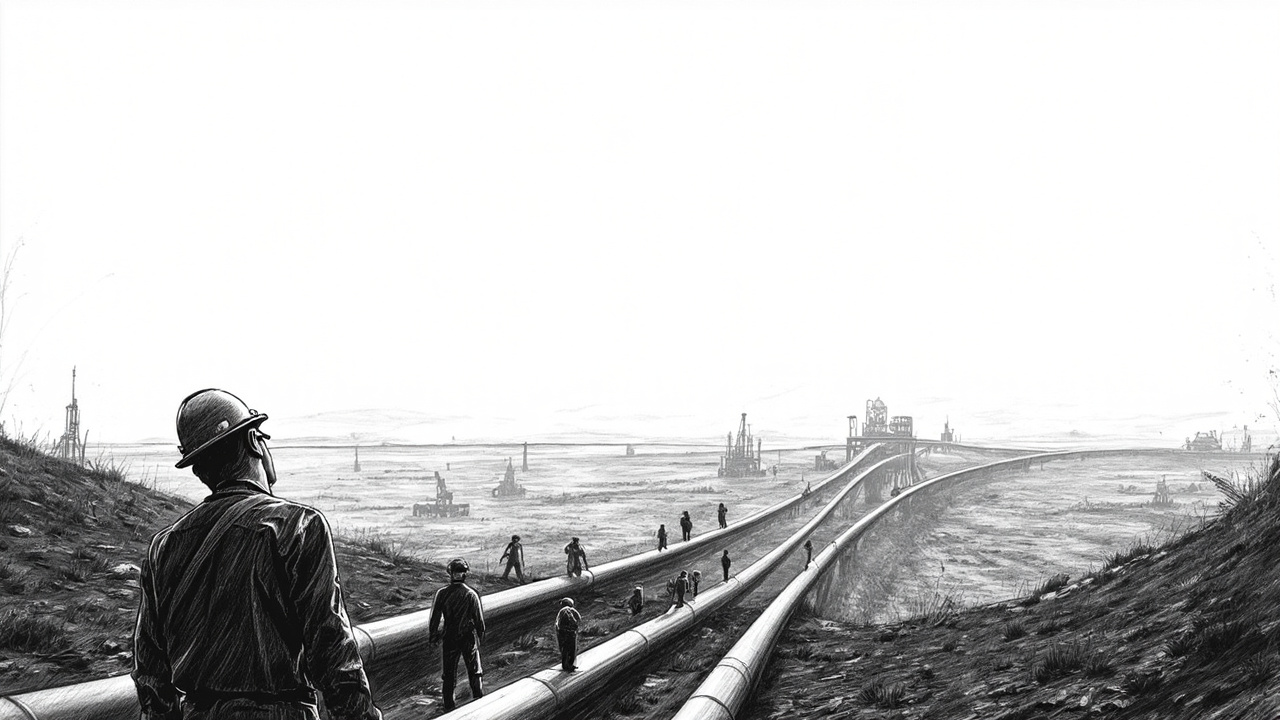
Nigeria Positions Gas as Continental Power Source
Bashir Bayo Ojulari, Group Chief Executive Officer of Nigeria National Petroleum Company Limited, declared Nigeria's intent to leverage its gas resources for Africa's economic advancement. Ojulari made this statement during a recent energy forum in Abuja. He emphasized Nigeria's role as an emerging global energy leader. The country holds Africa's largest proven gas reserves at 206 trillion cubic feet. This represents about 33% of Africa's total gas reserves. Nigeria's gas production currently stands at approximately 8 billion cubic feet per day. The NNPC GCEO outlined plans to expand this capacity significantly.
Strategic Infrastructure Development Underway
Nigeria is accelerating key gas infrastructure projects to enable regional energy distribution. The Ajaokuta-Kaduna-Kano pipeline project represents a critical component. This 614-kilometer pipeline will transport gas from southern fields to northern industrial zones. Construction costs exceed $2.8 billion (₦4.2 trillion). The Nigerian Midstream and Downstream Petroleum Regulatory Authority approved the project's environmental impact assessment in 2023. Completion is scheduled for 2025. The Trans-Saharan Gas Pipeline represents another major initiative. This 4,128-kilometer pipeline would connect Nigeria to Algeria and European markets. Project costs are estimated at $13 billion (₦19.5 trillion). Feasibility studies concluded in 2022. The Nigerian Content Development and Monitoring Board ensures local participation in these projects.
Domestic Industrial Transformation Plans
Nigeria's gas strategy includes substantial domestic industrialization components. The government launched the Decade of Gas initiative in 2021. This program aims to transition Nigeria from oil dependency to gas-based industrialization. Key industrial projects include the Brass Fertilizer and Petrochemical Company. This $3.5 billion (₦5.25 trillion) facility will produce 1.7 million metric tons of urea annually. Construction began in 2022 with completion expected by 2026. The Dangote Fertilizer Plant already operates at 3 million metric tons annual capacity. It represents Africa's largest urea complex. The Nigerian Gas Flare Commercialization Program targets elimination of routine gas flaring by 2030. This initiative could capture approximately 700 million standard cubic feet of gas daily. The program has attracted bids from 200 companies since its 2020 launch.
Regional Energy Export Ambitions
Nigeria plans to become Africa's primary gas exporter through expanded liquefied natural gas capacity. Nigeria LNG Limited operates six trains with 22 million metric tons per annum capacity. Train 7 expansion will add 8 million metric tons by 2025. The $10 billion (₦15 trillion) project involves Saipem, Chiyoda, and Daewoo as engineering contractors. Nigeria exported 19.4 million metric tons of LNG in 2023. This generated approximately $8.3 billion in revenue. The West African Gas Pipeline Company supplies gas to Benin, Togo, and Ghana. Current capacity reaches 474 million standard cubic feet daily. Expansion plans target 600 million standard cubic feet by 2026. The African Continental Free Trade Area agreement facilitates cross-border energy trade. Nigeria ratified this agreement in 2020.
Why It Matters
Africa faces substantial energy deficits that hinder economic development. The International Energy Agency reports 600 million Africans lack electricity access. Nigeria's gas resources could address this challenge. Gas-fired power generation offers reliable baseload electricity. This supports industrial growth across the continent. The African Development Bank estimates Africa needs $130 billion annual infrastructure investment. Energy projects represent a significant portion of this requirement. Nigeria's gas strategy aligns with global energy transition goals. Natural gas emits approximately 50% less carbon dioxide than coal when burned for power. The Nigerian government established the Energy Transition Office in 2022. This office coordinates the country's net-zero by 2060 commitment.
What Businesses Should Watch
Energy companies should monitor licensing rounds for gas blocks. The Nigerian Upstream Petroleum Regulatory Commission plans marginal field bid rounds in 2024. These include both onshore and shallow water assets. Industrial manufacturers should track gas availability for operations. The Nigerian Gas Marketing Company Limited manages domestic gas supply contracts. Pricing follows the Nigerian Gas Transportation Network Code. Infrastructure firms should watch public-private partnership opportunities. The Infrastructure Concession Regulatory Commission oversees these arrangements. The National Gas Expansion Programme offers incentives for compressed natural gas vehicle conversion. This includes duty waivers on conversion kits. Financial institutions should note project financing requirements. The African Export-Import Bank committed $1 billion to African energy projects in 2023. The Nigeria Sovereign Investment Authority manages the $2.1 billion Nigeria Infrastructure Fund.
Implementation Challenges and Solutions
Security concerns affect pipeline infrastructure in the Niger Delta region. The Nigerian National Petroleum Company Limited established the Integrated Security Strategy in 2021. This coordinates military, community, and technology approaches. Funding constraints delay some projects. The World Bank approved $500 million for Nigeria's power sector recovery in 2023. The African Development Bank provided $210 million for energy access projects. Regulatory coordination requires improvement between federal and state authorities. The Petroleum Industry Act 2021 created clearer regulatory frameworks. It established the Nigerian Upstream Petroleum Regulatory Commission and Nigerian Midstream and Downstream Petroleum Regulatory Authority. Technical capacity gaps exist in specialized engineering fields. The Nigerian Content Development and Monitoring Board mandates local training components in all major contracts.
Economic Impact Projections
The Nigerian Economic Summit Group estimates gas sector expansion could create 500,000 direct jobs by 2030. This includes positions in construction, operations, and maintenance. The National Bureau of Statistics reports Nigeria's oil and gas sector contributed 5.7% to GDP in 2023. Gas expansion could increase this contribution to 8% by 2030. Export revenue projections suggest $15 billion annually from LNG by 2027. Domestic gas utilization could save $5 billion yearly in fuel imports. The Manufacturers Association of Nigeria reports members spend 40% of production costs on energy. Reliable gas supply could reduce this to 25%. The Central Bank of Nigeria's development finance interventions include ₦1 trillion for gas infrastructure. This complements commercial bank lending to the sector.