Nigeria Markets Face Hidden Tax Revenue Crisis as Cocoa Crashes

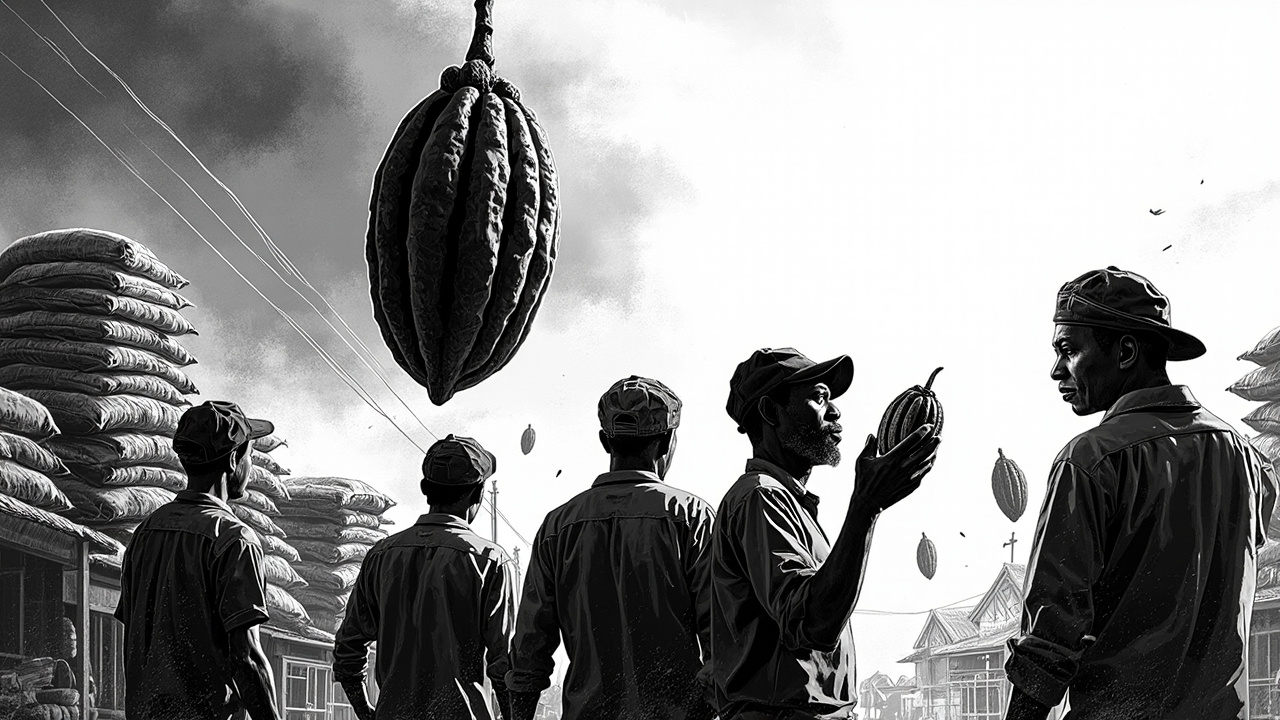
The cocoa price collapse from USD 11,000 per metric ton in May 2025 exposes a deeper fiscal nightmare for Nigeria markets. While headlines focus on commodity volatility, the real story is brewing tax collection disaster.
Export Revenue Mirage Masks Collection Reality
Nigeria's cocoa exports hit ₦538 billion in Q3 2024, representing 2.62% of total exports as the fifth-largest revenue source. This suggests export duties and VAT collections peaked during the price boom. The risk is that informal cocoa trading networks - which dominate smallholder production - generated paper profits that tax authorities cannot effectively capture.
With production declining 6% between 2015-2023 to 284,000 tonnes while exports grew 65% to 329,000 tonnes, the math reveals dangerous dependency on price premiums rather than volume growth. Key processors like FTN Cocoa Processors Plc and Olam International likely benefited from transfer pricing advantages during the boom, but their actual tax contributions remain opaque. Johnvents Group's $40.5 million British International Investment funding signals foreign capital confidence, yet questions linger about local revenue capture from these processing investments.
compliance Costs Crush Smaller Players
The cocoa crash will devastate Nigeria's fragmented producer base already struggling with aging plants and disease outbreaks. Expect widespread tax compliance failures as farmers face margin compression. The informal sector - representing most cocoa smallholders - will retreat further from formal tax systems.
Processing capacity expansion at facilities like Ile Oluji (growing from 13,000 to 30,000 metric tonnes annually) creates compliance cost burdens that smaller operators cannot absorb. This suggests market consolidation favoring large players with sophisticated tax planning capabilities. VAT refund backlogs will worsen as exporters demand relief while government revenues shrink.
Nigeria's cocoa tax windfall was always temporary. The real test comes when prices normalize and authorities discover their collection infrastructure captured smoke, not substance.