Ghana Waste Revenue Plan Faces GHS 47.9bn Collection Reality

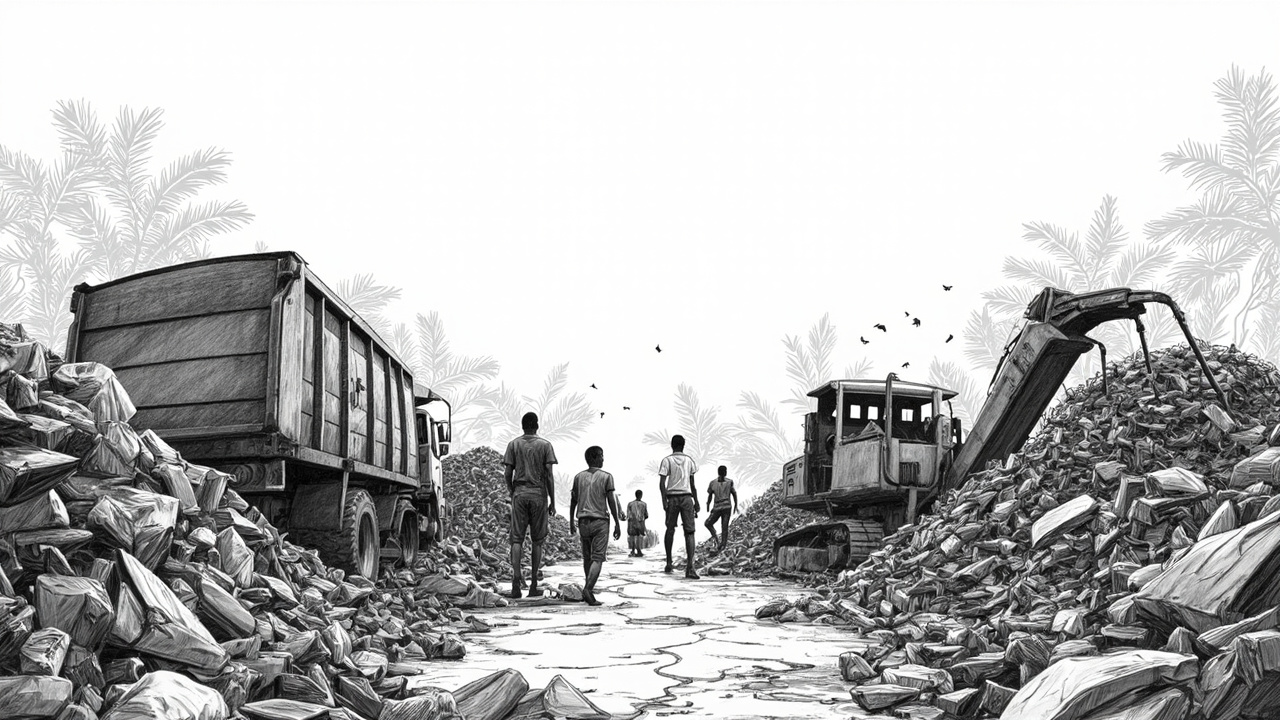
Tax collection gaps threaten waste-to-revenue ambitions
Ghana markets face a familiar challenge: ambitious revenue projections colliding with collection reality. The Institute of Statistical, Social and Economic Research (ISSER) claims Ghana could generate GHS 47.9 billion annually by 2032 through scaled waste management investment, according to recent research. This assumes the Ghana Revenue Authority can actually collect taxes from a sector that operates almost entirely off the books.
The numbers sound impressive until you consider Ghana's track record. The country struggles to collect basic VAT from formal businesses, with refund backlogs stretching months. Now ISSER wants to formalize thousands of informal waste actors who have spent decades avoiding any government interaction. The compliance cost alone could kill the economics.
Consider the underlying challenge. Ghana generates substantial waste volumes annually. To hit GHS 47.9 billion in economic benefits, each unit of waste needs to generate significant value creation. That's not waste collection revenue - that's total economic benefit, including health savings and productivity gains. The actual tax take will be a fraction of this ambitious projection.
Informal sector integration creates enforcement nightmare
The ISSER study identifies informal waste actors as critical to scaling but offers no roadmap for bringing them into the tax net. These operators survive precisely because they avoid regulatory costs. Force them to register, pay taxes, and comply with formal sector rules, and many will simply disappear.
Ghana's informal economy represents a substantial portion of total employment. Previous formalization efforts have failed because compliance costs exceed the benefits for small operators. Waste pickers earning modest daily incomes cannot afford business registration fees, let alone quarterly tax filings.
The enforcement challenge is massive. Ghana Revenue Authority lacks the capacity to monitor thousands of small waste businesses across urban and rural areas. The agency already struggles with transfer pricing compliance among multinational corporations. Adding micro-enterprises to the mix stretches resources beyond breaking point.
Revenue assumptions ignore collection costs
ISSER frames waste as a "strategic national asset rather than an environmental burden," according to the research. This ignores the cost of actually collecting revenue from dispersed, informal operators scattered across Ghana's urban and rural landscapes.
The study requires sustained investment through 2032 but provides limited detail on funding mechanisms or government commitment. Ghana's constrained fiscal position cannot support major infrastructure spending without external financing. That means World Bank procurement conditions, donor delays, and political interference - the same pattern that has derailed previous large-scale infrastructure initiatives.
Ghana's revenue collection history suggests significant challenges ahead. The country has struggled with digital taxation initiatives, property tax reforms, and VAT expansion efforts. The waste sector offers even less visibility and control than these previous attempts at revenue enhancement.
The compliance burden alone could undermine the entire initiative. Small waste operators function on thin margins and cannot absorb the administrative costs of formal sector participation. Registration requirements, tax filings, and regulatory compliance create barriers that may drive operators further underground rather than into the formal economy.
Implementation reality check
Expect this initiative to face substantial headwinds when initial collection targets miss projections by significant margins. The gap between policy ambition and implementation capacity has characterized numerous Ghanaian revenue initiatives over the past decade.
The real opportunity lies in selective formalization of larger operators who can absorb compliance costs and generate meaningful tax revenue. But that approach generates substantially lower annual revenue than ISSER's ambitious projections suggest.
Ghana's waste management sector undoubtedly offers economic potential. However, capturing GHS 47.9 billion in annual benefits assumes perfect implementation across an imperfect system. The country's track record suggests a more modest, targeted approach would yield better results than attempting to formalize an entire informal sector overnight.
The fundamental question remains whether Ghana can build the institutional capacity to collect revenue from thousands of small waste operators while maintaining the economic incentives that make formalization attractive. Previous efforts suggest this balance remains elusive.